

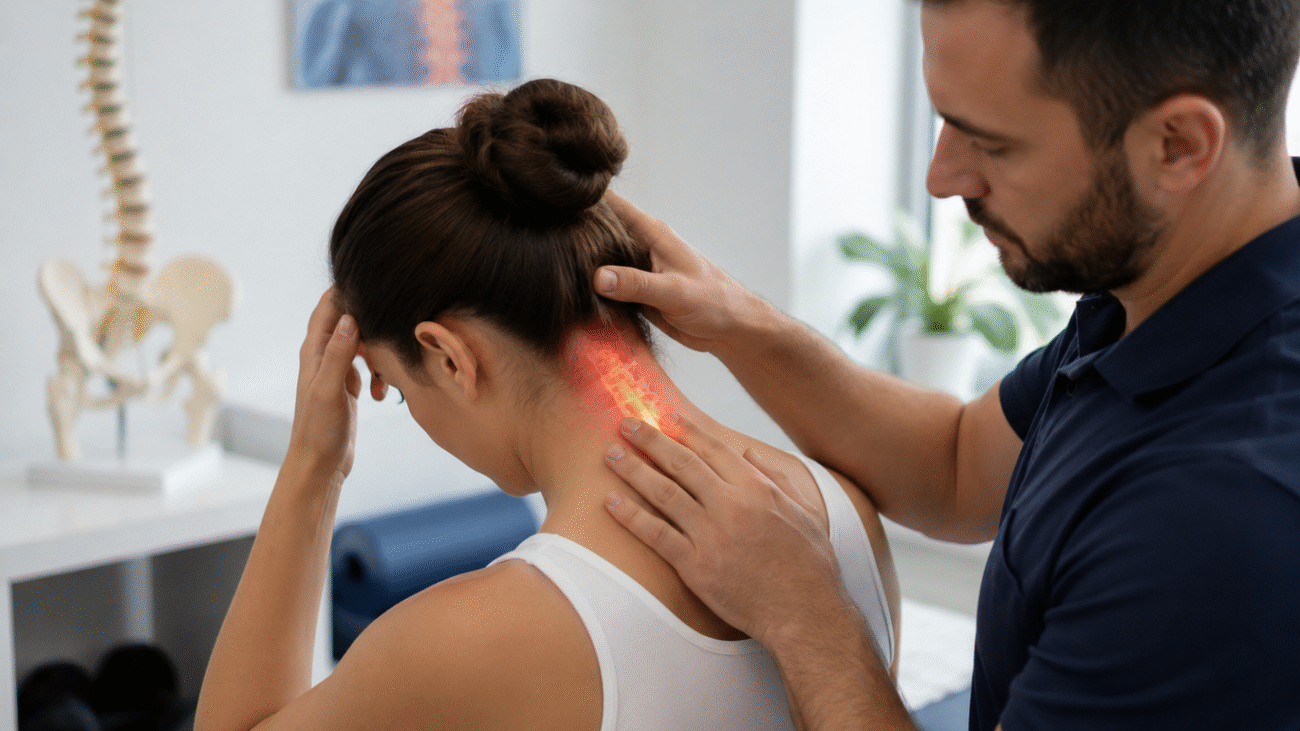
If you’re suffering from frequent headaches, you might be surprised to learn that the source isn’t always in your head. Many chronic headaches originate in the neck — a condition called cervicogenic headache. At Rishaan Physio & Wellness Clinic in Mississauga, our physiotherapists are trained to identify and treat these headaches at their root cause.
What Is a Cervicogenic Headache?
A cervicogenic headache is a headache that originates from dysfunction in the cervical spine (neck). The upper cervical joints, muscles, and nerves share pain pathways with structures in the head — so when the neck is irritated or restricted, it can produce pain that is felt as a headache.
Cervicogenic headaches typically:
- Start at the base of the skull and radiate to the forehead, temple, or behind the eye
- Affect one side of the head
- Are triggered or worsened by certain neck positions or movements
- Come with neck pain or stiffness
- Are not associated with nausea, vomiting, or light sensitivity (unlike migraines)
Cervicogenic vs. Tension vs. Migraine — Key Differences
Cervicogenic headache: Originates from the neck; accompanied by neck stiffness; triggered by neck movement or prolonged postures; one-sided.
Tension headache: Band-like pressure around the head; often bilateral; triggered by stress and muscle tension. May have a cervical component.
Migraine: Moderate to severe; throbbing; often one-sided; accompanied by nausea, light/sound sensitivity; can last 4–72 hours.
Physiotherapy is most effective for cervicogenic and tension headaches. Some migraines also have a cervical component that responds to treatment.
How Physiotherapy Treats Headaches
Manual Therapy — Cervical Joint Mobilization
The most powerful tool for cervicogenic headaches. Skilled mobilization of the upper cervical spine (C1–C3) reduces joint irritation and the referred pain that drives headaches. Many patients feel relief within 2–3 sessions.
Soft Tissue Release
Release of the suboccipital muscles (at the base of the skull), upper trapezius, and levator scapulae — muscles that are chronically tight in headache sufferers and contribute to referred head pain.
Dry Needling / IMS
Targeting trigger points in the neck and shoulder muscles that refer pain to the head. This is particularly effective for tension-type headaches.
Postural Correction
Forward head posture places enormous load on the cervical spine. Correcting posture — especially for office workers and those using phones or computers for extended periods — significantly reduces headache frequency.
Exercise Program
Deep neck flexor strengthening, chin tuck exercises, and shoulder blade stabilization exercises to address the muscular imbalances that contribute to cervical dysfunction and headaches.
Lifestyle Factors That Trigger Headaches
- Poor workstation ergonomics
- Extended screen time without breaks
- Sleeping in awkward positions (stomach sleeping)
- Stress and jaw clenching (bruxism)
- Dehydration and irregular meals
Frequently Asked Questions
Can physiotherapy cure headaches?
Physiotherapy is highly effective for cervicogenic and tension headaches — conditions where neck dysfunction is a primary driver. Many patients experience significant reduction in headache frequency and severity, and some become headache-free. It is not a cure for all headache types, particularly migraines with no cervical component.
What is a cervicogenic headache?
A cervicogenic headache originates from dysfunction in the neck (cervical spine). The upper cervical joints and muscles share pain pathways with the head, so neck problems produce pain felt as a headache — typically starting at the base of the skull and radiating forward.
How do I know if my headache is coming from my neck?
Signs include: headache that starts at the base of the skull, one-sided headache, headache triggered by neck movement or prolonged positions (like looking at a screen), accompanying neck stiffness. A physiotherapy assessment can confirm whether your neck is contributing to your headaches.
How many physio sessions do I need for headaches?
Most patients with cervicogenic headaches notice significant improvement within 4–6 sessions. A full course of treatment is typically 8–12 sessions, combined with a home program for posture and exercises.
Is physiotherapy effective for tension headaches?
Yes — physiotherapy addresses the muscle tension and postural factors that cause tension headaches. Manual therapy, trigger point release, and posture correction consistently reduce tension headache frequency and severity.
Book Headache Treatment at Rishaan Physio
Stop masking headaches with painkillers. Treat the source.
No referral needed | Same-day appointments | Direct billing
📍 5105 Hurontario St, Unit 7, Mississauga 📞 Call (905)-800-1661