
Learn how much custom orthotics cost in Ontario, whether insurance covers them, what insurers require for claims, how long orthotics last, and how to make the most of your extended health benefits in Mississauga.

Learn how much custom orthotics cost in Ontario, whether insurance covers them, what insurers require for claims, how long orthotics last, and how to make the most of your extended health benefits in Mississauga.
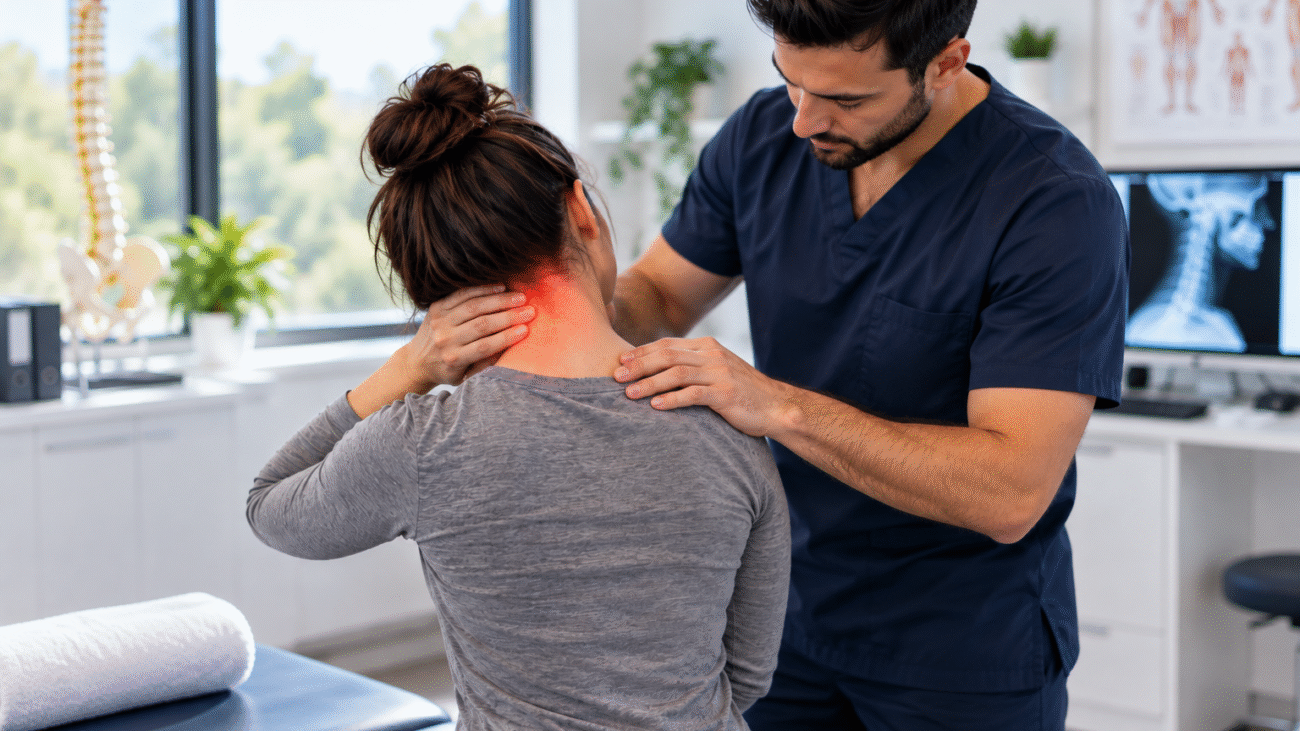
If you’ve been in a car accident and are experiencing neck pain, stiffness, headaches, or back pain, chiropractic care can support your recovery. Learn how chiropractic treatment helps manage whiplash and other accident-related injuries, what to expect during recovery, and how auto insurance coverage works in Ontario.
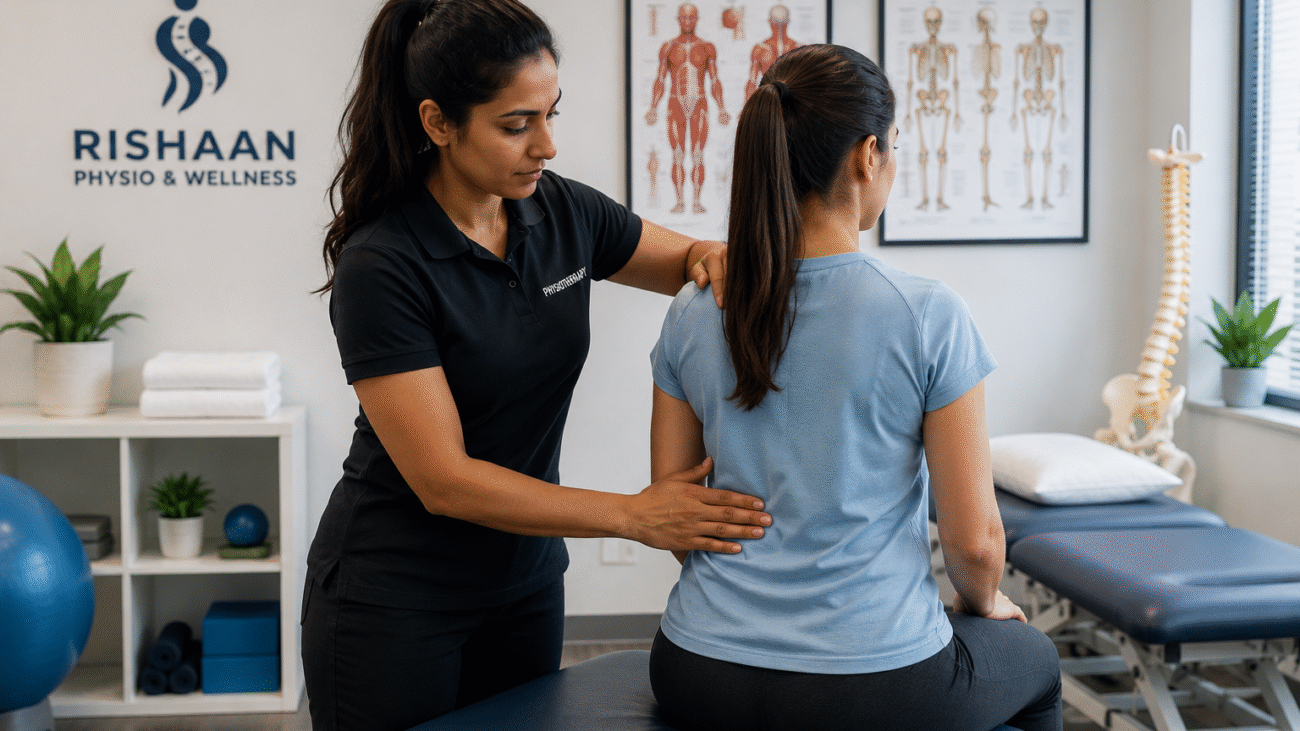
Mississauga is one of Ontario’s largest business hubs — home to thousands of office workers, remote professionals, financial services employees, and tech workers who spend 6, 8, or even 10 hours a day seated at a desk. And this prolonged sitting is silently causing an epidemic of neck pain, headaches, upper back tightness, lower back pain, and shoulder dysfunction.
The most common advice? “Sit up straight.” But posture correction is far more complex — and far more achievable — than a simple reminder to straighten your spine. At Rishaan Physio & Wellness Clinic in Mississauga, our physiotherapists have helped hundreds of desk workers not just manage posture-related pain, but genuinely correct the underlying muscle imbalances that cause it.
The human body was not designed for prolonged sitting. When you sit — particularly in the typical office posture — a cascade of muscular and skeletal adaptations occur:
FORWARD HEAD POSTURE (TECH NECK)
For every inch your head moves forward of its neutral position over the spine, the effective weight on your cervical spine increases dramatically. Most desk workers carry their head 2–3 inches forward — effectively loading their cervical spine with 27–42 pounds (compared to the normal 12 pounds in neutral). Over years, this causes:
ROUNDED SHOULDERS (PROTRACTED SCAPULAE)
Hours of typing and mouse use cause the pectoral muscles (chest) to shorten and tighten, while the middle and lower trapezius and rhomboids (upper back muscles) become lengthened and weak. This imbalance pulls the shoulders forward, narrows the subacromial space (contributing to shoulder impingement), and creates chronic upper back pain.
KYPHOTIC THORACIC SPINE
The mid-back (thoracic spine) becomes excessively rounded — a posture called hyperkyphosis. This restricts breathing depth, increases lower back compensatory strain, and limits overhead mobility.
ANTERIOR PELVIC TILT AND TIGHT HIP FLEXORS
Prolonged sitting tightens the hip flexors (psoas and iliacus) and inhibits the gluteal muscles. The resulting anterior pelvic tilt increases lumbar lordosis and places chronic compressive load on the lumbar discs and facet joints — the anatomical basis for the epidemic of lower back pain among office workers.
Posture correction is not about willpower or reminding yourself to sit up. It’s about systematically addressing the muscle imbalances and movement patterns that your body has developed over years of desk work. This requires professional guidance — and a structured program.
At Rishaan Physio in Mississauga, posture correction involves:
POSTURAL ASSESSMENT
Your physiotherapist conducts a comprehensive postural analysis — photographing and measuring your standing and seated posture, assessing muscle length, strength, and joint mobility — to identify your specific pattern of dysfunction. Not all “bad posture” is the same; treatment must target your particular imbalances.
CORRECTIVE EXERCISE PROGRAM
The cornerstone of posture correction. Your program will include:
For the cervical spine:
For the thoracic spine and shoulders:
For the lower back and hips:
Chronic postural muscles — particularly the upper trapezius, levator scapulae, and suboccipital muscles — develop dense trigger points that resist manual therapy alone. IMS at Rishaan Physio provides rapid release of these trigger points, allowing the corrective exercises to work more effectively.
The most effective posture correction program is undermined if you return to a poorly set-up workstation for 8 hours every day. Your physiotherapist will provide specific ergonomic recommendations:
MONITOR HEIGHT: Top of screen at or slightly below eye level. Avoids both forward head (screen too low) and neck extension (screen too high).
MONITOR DISTANCE: Arm’s length away (approximately 50–70 cm). Prevents eye strain and forward reaching.
CHAIR HEIGHT: Hips at 90° or slightly open. Thighs parallel to ground. Feet flat on floor.
LUMBAR SUPPORT: Use a lumbar roll or rolled towel in the curve of the lower back if your chair lacks adequate support.
KEYBOARD AND MOUSE: Elbows at 90°, shoulders relaxed. Mouse close to body — reaching for a distant mouse chronically shortens the shoulder.
MOVEMENT BREAKS: Set a timer for every 30–45 minutes. Stand, walk briefly, perform 2–3 postural exercises (chin tucks, shoulder rolls, hip flexor stretch). Posture is dynamic — no static position, however “correct,” is beneficial for more than 30–45 minutes continuously.
This is highly individual, but as a general guide:
Posture correction is a process, not a treatment. The physiotherapy program gives you the tools — the consistency you apply determines the long-term outcome.
Q: Can physiotherapy actually correct years of bad posture?
A: Yes — but “correct” should be understood as “significantly improve” rather than “return to perfect.” The musculoskeletal system is remarkably adaptable. Consistent, targeted exercise over 3–6 months produces meaningful, measurable posture improvements even after years of dysfunction.
Q: Are standing desks the solution to posture problems?
A: Standing desks help by adding postural variety, but standing all day is as harmful as sitting all day — both in the same position for hours. The solution is movement variability: sit for 45 minutes, stand for 15, move briefly. A sit-stand desk is a useful tool, but it doesn’t replace physiotherapy and movement.
Q: How do I know if my posture is causing my headaches?
A: If your headaches start at the base of the skull, worsen through the day (especially after hours at a desk), are located at the back of the head and temples, and ease briefly with neck stretching — they are very likely cervicogenic (neck-sourced) headaches related to postural dysfunction.
Q: Can my child or teenager have posture correction physiotherapy?
A: Yes. Adolescent posture problems — driven by school desk work, phone use, and heavy backpacks — respond very quickly to physiotherapy because the musculoskeletal system is still highly adaptable. Early intervention prevents the establishment of chronic adult patterns.
Q: Do I need a referral from my doctor for posture correction physiotherapy?
A: No. You can book directly at Rishaan Physio in Mississauga without a physician referral.
Stop managing your posture symptoms. Start correcting the cause.
Rishaan Physio & Wellness Clinic
5105 Hurontario St, Unit 7, Mississauga, ON
Phone: (905) 800-1661
Website: rishaanphysio.com
Open 7 days a week | Free pickup & drop-off available

If you’re a runner in Mississauga — whether you train along the Credit River trails, through Heartland Town Centre, or on the roads of Erin Mills — IT band syndrome (ITBS) is one of the most frustrating injuries you’ll encounter.
It typically starts as a dull ache on the outer side of the knee. Then it progresses to a sharp, burning pain that forces you to walk. Within weeks, runs that were once manageable become impossible beyond 20 minutes. Foam rolling helps briefly — but the pain returns the moment you lace up again.
IT band syndrome is the most common cause of lateral knee pain in runners, accounting for up to 22% of all running-related injuries. And here’s the key insight that most runners miss: IT band syndrome is not actually a stretching problem. It’s a hip and biomechanics problem. Which is exactly why physiotherapy — not foam rolling — is the solution.
The iliotibial (IT) band is a thick band of fascia — fibrous connective tissue — that runs along the outer side of the thigh, from the hip (iliac crest and tensor fasciae latae muscle) down to the outer edge of the knee (Gerdy’s tubercle on the tibia).
Unlike a muscle, the IT band cannot stretch. It acts as a stabiliser for the knee and hip during the swing phase of running.
WHAT CAUSES IT BAND SYNDROME?
Contrary to popular belief, ITBS is not caused by the IT band being “too tight” — it is caused by excessive compression of the IT band against the lateral femoral epicondyle (a bony prominence on the outer femur) during repetitive knee flexion-extension. When the knee bends to approximately 30° during running, the IT band crosses over this point — and if the hip stabilisers are weak or running mechanics are poor, compressive forces at this point become excessive.
WEAK HIP ABDUCTORS AND GLUTES
The gluteus medius and minimus are responsible for controlling pelvic drop during single-leg stance. When these muscles are weak, the pelvis drops on the opposite side during running, causing increased hip adduction (inward movement) — which dramatically increases IT band compressive load. This is the number one cause of ITBS in runners.
TRAINING ERRORS
BIOMECHANICAL FACTORS
ANATOMICAL FACTORS
Foam rolling the IT band is the most common self-treatment strategy — and while it provides temporary pain relief, it does not address the underlying cause.
Since the IT band cannot stretch or lengthen (it’s fascia, not muscle), foam rolling cannot “release” it. What foam rolling does is temporarily desensitise the lateral soft tissues and may reduce trigger points in the tensor fasciae latae (TFL) — providing brief relief.
However, if the hip weakness and running mechanics driving the condition are not corrected, the pain returns every time you run.
Physiotherapy addresses the root cause — not just the symptoms.
PHASE 1: ACUTE PAIN MANAGEMENT (Weeks 1–2)
PHASE 2: HIP STRENGTHENING AND BIOMECHANICS (Weeks 2–6)
This is the critical phase. Your physiotherapist at Rishaan Physio will:
PHASE 3: GRADED RUNNING RETURN (Weeks 6–12)
With appropriate physiotherapy:
The key predictor of recovery is compliance with hip strengthening and gait modification. Runners who continue training through ITBS without addressing the cause face a cycle of recurring injury.
Once you have recovered, long-term prevention involves:
Q: Should I stop running completely with IT band syndrome?
A: Initially, yes — a 1–2 week rest from running while beginning physiotherapy is usually recommended. Continuing to run through acute ITBS inflammation makes recovery significantly longer. Once the acute phase resolves, a structured graded return-to-run program begins.
Q: Can I bike or swim instead of running during recovery?
A: Yes — cycling (especially stationary bike with high seat) and swimming do not load the IT band compression zone and are excellent for maintaining cardiovascular fitness during recovery.
Q: Will cortisone injections help IT band syndrome?
A: Cortisone injections can reduce inflammation in the short term but do not address the underlying biomechanical causes. They are generally considered when conservative physiotherapy has not provided adequate relief, as a bridge to allow more effective rehabilitation.
Q: Does IT band syndrome ever require surgery?
A: Rarely. Surgery (IT band release) is considered only after 6–12 months of failed conservative treatment. The vast majority of ITBS cases resolve with structured physiotherapy.
Q: Can custom orthotics help IT band syndrome?
A: Yes — if overpronation is contributing to your ITBS (which is common), custom orthotics can reduce the tibial rotation and hip adduction forces that load the IT band.
Don’t let IT band syndrome sideline your training. Get a proper assessment, build the hip strength you need, and return to running stronger than before.
Rishaan Physio & Wellness Clinic
5105 Hurontario St, Unit 7, Mississauga, ON
Phone: (905) 800-1661
Website: rishaanphysio.com
Open 7 days a week | Free pickup & drop-off available
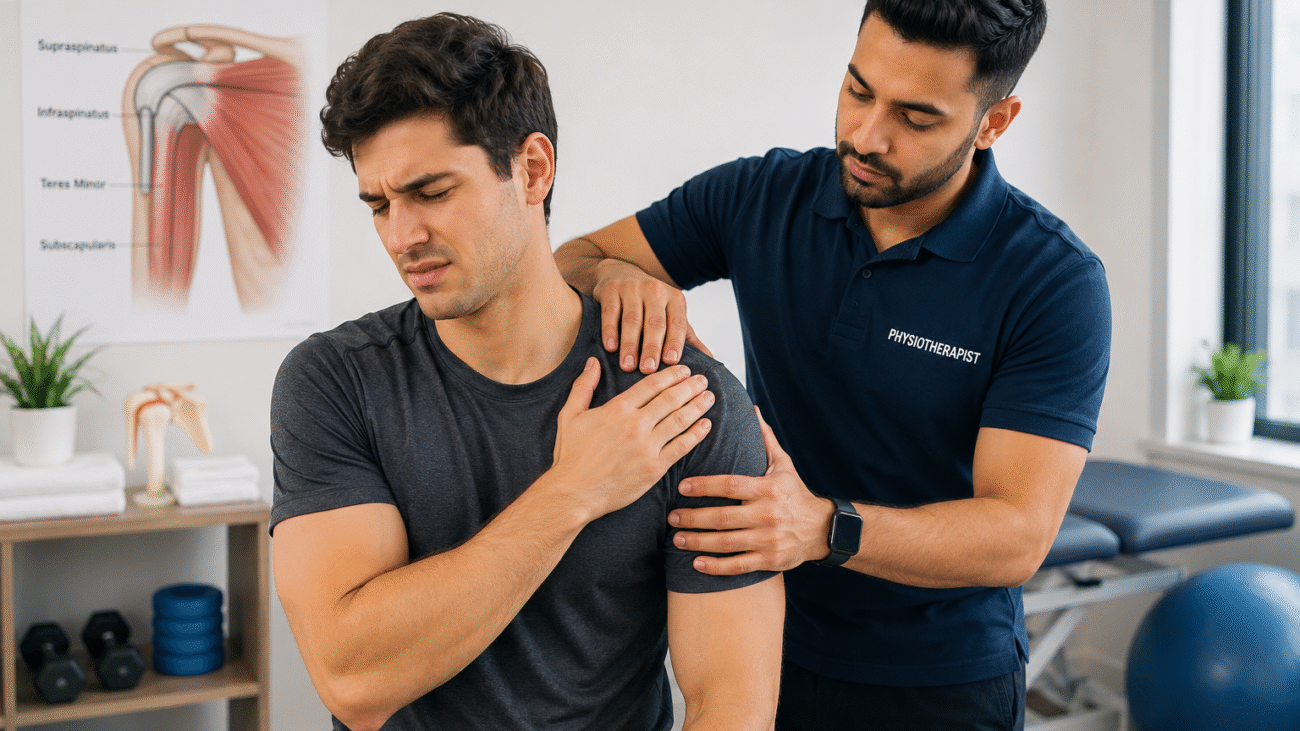
Few injuries are as frustrating as a rotator cuff problem. The shoulder — the most mobile joint in the body — becomes painful and limited, interfering with everything from getting dressed to sleeping to reaching overhead. And then comes the fear: “Do I need surgery?”
For the majority of rotator cuff injuries, the answer is no. Evidence-based physiotherapy has been shown to achieve outcomes equivalent to surgical repair for many partial and even some complete rotator cuff tears — without the risks, cost, and lengthy recovery of surgery.
At Rishaan Physio & Wellness Clinic in Mississauga, shoulder rehabilitation is one of our most commonly treated areas. Here is a comprehensive guide to rotator cuff injuries and how physiotherapy helps.
The rotator cuff is a group of four muscles and their tendons that surround the shoulder joint, holding the humeral head (the “ball”) in the glenoid fossa (the “socket”) and enabling shoulder rotation and elevation.
The four muscles are:
These muscles work together to provide dynamic stability during overhead and reaching activities. When one or more is injured, the entire shoulder mechanism is disrupted.
ROTATOR CUFF TENDINOPATHY (TENDINITIS)
The most common rotator cuff problem — gradual degeneration of the tendon fibres, usually from repetitive overhead activity, poor posture, or age-related changes. Symptoms include aching shoulder pain, especially with overhead movements, and nighttime pain. This responds very well to physiotherapy.
SUBACROMIAL IMPINGEMENT SYNDROME
The supraspinatus tendon or subacromial bursa becomes compressed (impinged) in the narrow space under the acromion bone when the arm is raised. Causes sharp pain with overhead activity and a painful arc of movement (typically between 60–120° of elevation).
PARTIAL THICKNESS TEAR
A tear that does not extend entirely through the tendon thickness. Partial tears can be managed very successfully with physiotherapy in most cases.
FULL THICKNESS TEAR (COMPLETE TEAR)
The tendon tears completely through its full thickness. Small to medium full-thickness tears often respond well to conservative physiotherapy. Large or massive tears involving multiple tendons are more likely to require surgical consideration.
ROTATOR CUFF CALCIFIC TENDINOPATHY
Calcium deposits form within the rotator cuff tendon (usually supraspinatus), causing episodic intense pain. Shockwave therapy has a very high success rate for this condition.
– Gradual onset rather than sudden (in tendinopathy) or sudden onset with a specific incident (in acute tears)
PHASE 1: PAIN RELIEF AND PROTECTION (Weeks 1–4)
PHASE 2: PROGRESSIVE STRENGTHENING (Weeks 4–12)
PHASE 3: FUNCTIONAL AND SPORT-SPECIFIC REHABILITATION (Weeks 8–16+)
SHOCKWAVE THERAPY FOR ROTATOR CUFF CALCIFICATION
Extracorporeal shockwave therapy (ESWT) delivered by Rishaan Physio’s shockwave machine has demonstrated 70–80% success rates for calcific tendinopathy of the rotator cuff — often resolving calcium deposits and pain within 3–6 sessions without surgery.
IMS / DRY NEEDLING FOR PERSISTENT MUSCLE GUARDING
Chronic rotator cuff conditions often involve significant trigger point activity in the infraspinatus, supraspinatus, and periscapular muscles. IMS needle therapy at Rishaan Physio rapidly releases these trigger points, allowing more effective exercise rehabilitation.
For partial thickness tears: Yes — in the vast majority of cases, physiotherapy achieves complete pain relief and full functional recovery without surgery.
For full thickness tears: Research from the Journal of Bone and Joint Surgery (2021) found that 75% of patients with small to medium full thickness rotator cuff tears who received 12 weeks of structured physiotherapy reported equivalent outcomes to surgical repair at 2-year follow-up — without surgical risks, anaesthesia complications, or the 6–9 month post-surgical rehabilitation.
For large or massive tears: Surgery is more likely required, but prehabilitation before and physiotherapy after are still essential.
The current clinical guideline recommendation from most orthopaedic societies is a minimum 3-month trial of structured physiotherapy before surgical intervention is considered for rotator cuff injuries.
Consider surgical referral when:
Q: How long does rotator cuff physiotherapy take?
A: Tendinopathy and partial tears: 6–12 weeks typically. Full thickness tears managed conservatively: 3–6 months. Post-surgical rotator cuff repair: 4–6 months.
Q: Can I exercise at the gym with a rotator cuff injury?
A: With guidance from your physiotherapist — yes, with modifications. Exercises to avoid include overhead pressing, lat pulldowns behind the neck, bench press with heavy loads, and throwing. Your physiotherapist will provide a modified gym program.
Q: Should I use ice or heat for rotator cuff pain?
A: Ice is preferred in the acute (first 48–72 hours after an injury or flare-up) phase. After the acute phase, heat can be used for general muscle relaxation before exercise. Neither is a long-term solution — physiotherapy addresses the cause, not just the symptoms.
Q: Will my rotator cuff tear get worse without surgery?
A: This is a nuanced question. Some tears remain stable with conservative management; some progress over time. Regular physiotherapy and monitoring with your physiotherapist and orthopaedic surgeon (if involved) is the appropriate approach.
Q: How do I book a shoulder assessment in Mississauga?
A: Contact Rishaan Physio directly at (905) 800-1661 or visit rishaanphysio.com. No referral is required.
Rishaan Physio & Wellness Clinic
5105 Hurontario St, Unit 7, Mississauga, ON
Phone: (905) 800-1661
Website: rishaanphysio.com
Open 7 days a week | Free pickup & drop-off available
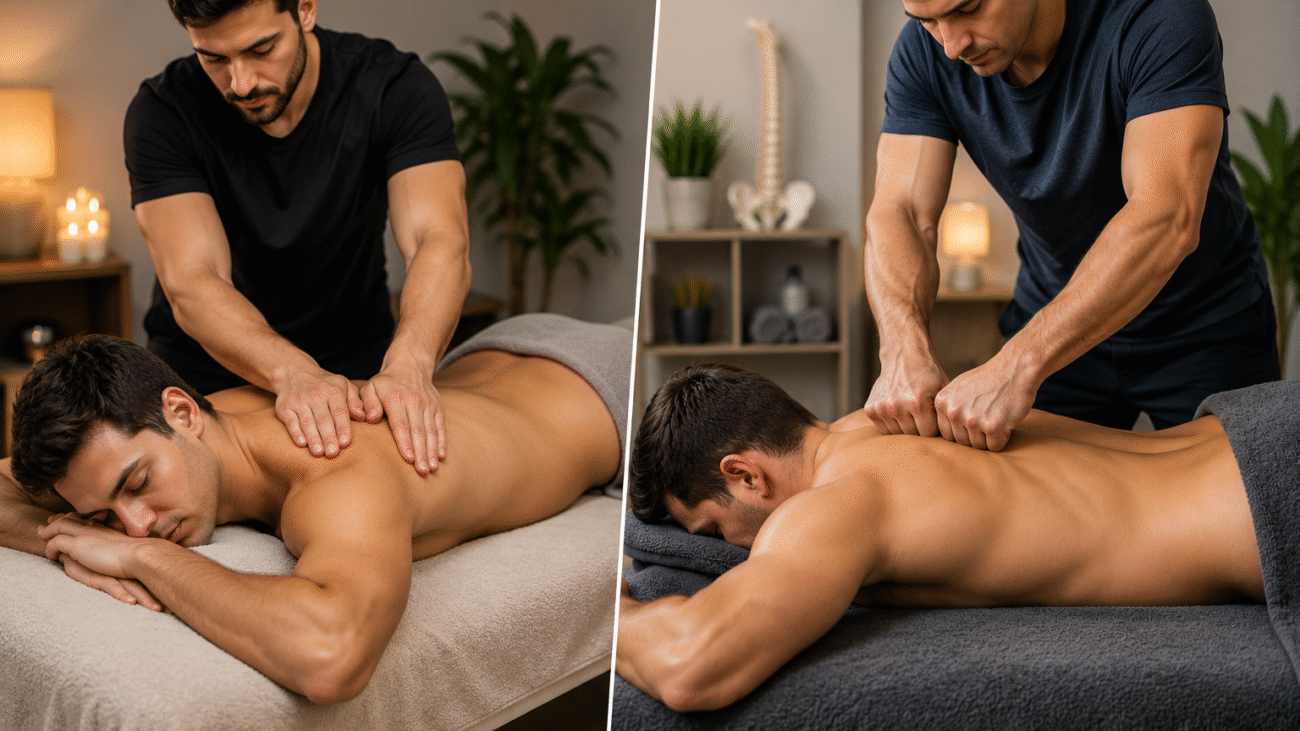
You’ve decided to book a massage therapy appointment — and then you see the question: deep tissue or Swedish?
If you’re not sure what the difference is, you’re not alone. Many people pick one at random, or always choose the same type out of habit, without knowing whether it’s actually the best fit for their needs.
At Rishaan Physio & Wellness Clinic in Mississauga, our Registered Massage Therapists (RMTs) work with patients across the full spectrum — from athletes with deep muscle injuries to busy professionals seeking stress relief. Here’s a practical guide to both massage types so you can make an informed choice.
Swedish massage is the most widely practiced form of therapeutic massage in North America. It was developed in the early 19th century by Swedish physiologist Per Henrik Ling and forms the foundation upon which most other massage modalities are built.
TECHNIQUES USED:
PRESSURE: Light to moderate. Swedish massage can be customised for sensitivity preference but generally works on superficial muscle layers and does not apply deep sustained pressure.
WHAT SWEDISH MASSAGE IS BEST FOR:
Deep tissue massage uses many of the same techniques as Swedish massage, but with significantly more sustained pressure and a focus on the deeper layers of muscle tissue, tendons, and fascia.
The goal of deep tissue massage is to reach beyond the superficial muscles to address chronic tension patterns, adhesions (scar tissue), and myofascial restrictions that Swedish massage cannot adequately affect.
TECHNIQUES USED:
PRESSURE: Moderate to deep. It should feel intense — “good pain” — but should never cause sharp pain, bruising, or lingering discomfort beyond 48 hours. Communication with your therapist during the session is essential.
WHAT DEEP TISSUE MASSAGE IS BEST FOR:
PRESSURE
Swedish: Light to moderate
Deep Tissue: Moderate to firm/deep
TARGET LAYER
Swedish: Superficial muscles, circulation
Deep Tissue: Deep muscle layers, fascia, adhesions
PRIMARY GOAL
Swedish: Relaxation, circulation, general wellbeing
Deep Tissue: Treatment of chronic pain, structural dysfunction, adhesions
SENSATION DURING TREATMENT
Swedish: Relaxing, comfortable throughout
Deep Tissue: Intense in areas of tension — “therapeutic discomfort”
POST-TREATMENT SORENESS
Swedish: Minimal — feel lighter and more relaxed
Deep Tissue: Mild soreness for 24–48 hours is normal and expected
BEST FOR
Swedish: Stress, mild tension, relaxation, general maintenance
Deep Tissue: Chronic pain, sports injuries, structural problems, adhesions
CHOOSE SWEDISH IF:
CHOOSE DEEP TISSUE IF:
CHOOSING BOTH — THE INTEGRATIVE APPROACH
Many patients benefit from an integrative session that begins with Swedish techniques to warm up the tissue and promote relaxation, then transitions into targeted deep tissue work on problem areas, and finishes with Swedish strokes to restore circulation and promote healing.
At Rishaan Physio in Mississauga, our RMTs are trained to seamlessly integrate both approaches based on your assessment findings and preferences. You don’t have to choose one or the other — a skilled therapist adapts throughout the session.
Before your session, communicate:
A good RMT will check in with you throughout the session to ensure pressure is appropriate. Never tolerate pain that feels sharp, burning, or wrong — speak up immediately.
Q: Is deep tissue massage safe for everyone?
A: Deep tissue massage is not recommended for people with blood clots, bleeding disorders, osteoporosis, recent fractures, active skin infections, or certain cancers. Pregnant women should not receive deep pressure on the abdomen. Always complete a full intake form and disclose medical conditions before your session.
Q: Will deep tissue massage fix my chronic back pain?
A: Deep tissue massage is a powerful tool for addressing the muscular component of back pain — releasing tight muscles, breaking down adhesions, and reducing pain. However, for complex or structural back conditions (disc herniation, spondylosis), it works best as part of a physiotherapy-directed treatment plan.
Q: How long should my massage session be?
A: For Swedish relaxation: 60 minutes is typically sufficient. For deep tissue with multiple problem areas: 75–90 minutes allows adequate time without rushing. For a focused problem area only: 45–60 minutes.
Q: How often should I get massage therapy?
A: For general wellness: monthly. For active treatment of a specific condition: weekly or bi-weekly initially, tapering as improvement occurs. Your RMT will recommend a frequency based on your goals and findings.
Q: Is massage therapy covered by insurance in Ontario?
A: Yes — registered massage therapy (RMT) services are covered by most extended health insurance plans in Ontario. Coverage amounts typically range from $300–$600 per year. At Rishaan Physio, we provide RMT receipts for insurance reimbursement and offer direct billing for most major plans.
Rishaan Physio & Wellness Clinic
5105 Hurontario St, Unit 7, Mississauga, ON
Phone: (905) 800-1661
Website: rishaanphysio.com
Open 7 days a week | Free pickup & drop-off available
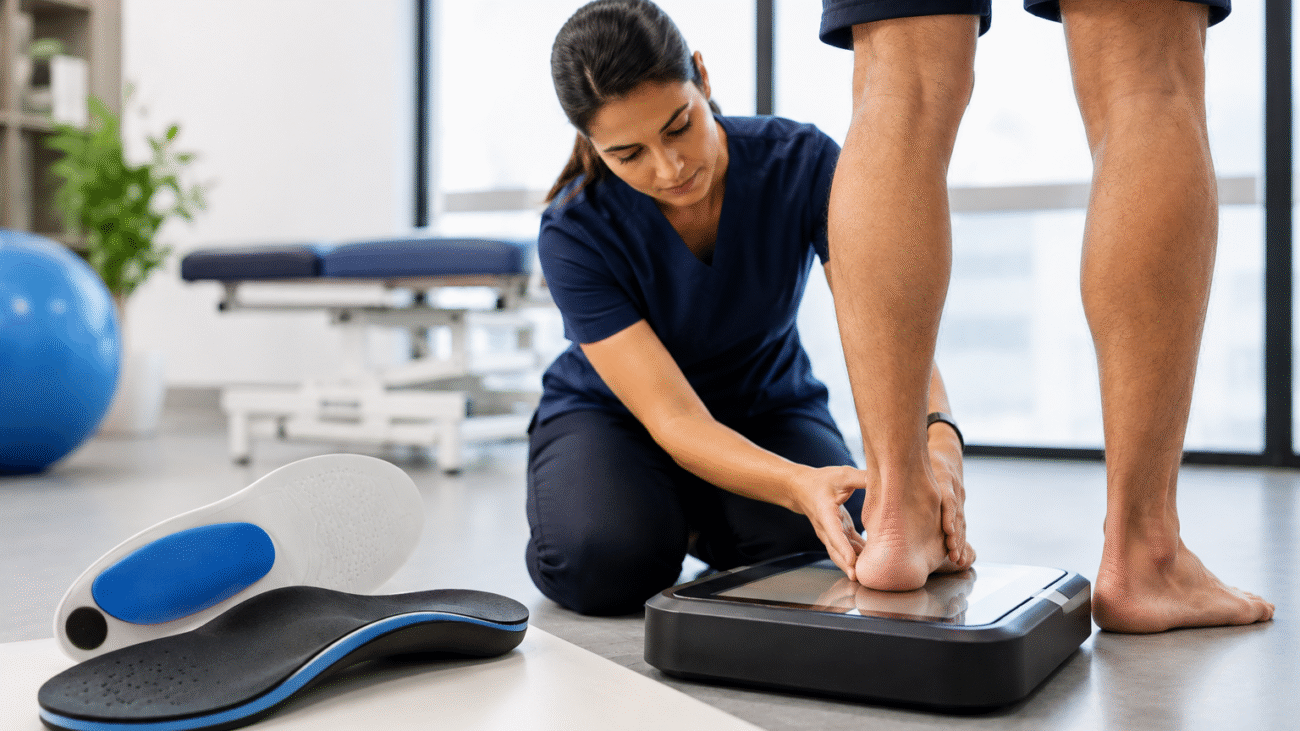
Your feet carry your entire body weight — every step, every day. When something isn’t working properly in the foot’s biomechanical structure, the effects ripple upward through the ankles, knees, hips, and lower back. Often, people manage these symptoms with painkillers, activity avoidance, or store-bought insoles — without ever addressing the underlying foot mechanics.
Custom orthotics — medical insoles prescribed and fabricated specifically for your foot structure — can correct these mechanics and provide relief for a surprising range of conditions. But how do you know if you actually need them?
Here are 7 signs that it may be time for a custom orthotic assessment at Rishaan Physio & Wellness Clinic in Mississauga.
If your first steps in the morning feel like walking on broken glass — intense heel pain that gradually eases as you walk around — you are likely experiencing plantar fasciitis. This is the most common cause of heel pain in adults, affecting approximately 10% of people during their lifetime.
Plantar fasciitis is almost always driven by abnormal foot mechanics — most commonly overpronation (the foot rolling inward excessively), which places repetitive excessive tension on the plantar fascia. Custom orthotics that control rearfoot pronation and provide a dedicated plantar fascia off-loading groove are one of the most effective conservative treatments available.
Multiple systematic reviews confirm that custom orthotics are significantly more effective than prefabricated insoles for plantar fasciitis.
Turn your shoes over and look at the wear pattern on the soles. Normal wear is moderate and relatively even, concentrated at the heel and ball of the foot.
Heavy wear on the inner heel and ball = overpronation (flat foot mechanics)
Heavy wear on the outer edge = supination / underpronation
Uneven wear is a visible sign of biomechanical abnormality. Without correction, this uneven loading is transmitted to your joints — particularly the knees, hips, and lower back — increasing wear and the risk of injury.
Patellofemoral pain syndrome (PFPS), commonly called “runner’s knee,” causes pain around or behind the kneecap — particularly with stairs, squatting, or prolonged sitting. It’s extremely common in runners, hikers, and people who stand for long hours.
The connection to your feet: overpronation causes the tibia (shin bone) to rotate inward, which in turn causes the kneecap to track abnormally, creating friction and pain. Custom orthotics that correct rearfoot mechanics reduce this abnormal tibial rotation and significantly decrease PFPS symptoms.
Research published in the British Journal of Sports Medicine demonstrates that custom orthotics significantly outperform flat insoles and stretching alone for patellofemoral pain.
Lower back pain that has persisted despite physiotherapy, massage, and spinal treatment — and has no clear disc, joint, or nerve cause identified on imaging — may have a biomechanical foot/leg origin.
A leg length discrepancy of as little as 6mm creates pelvic tilt, lumbar scoliosis, and compensatory muscle patterns that manifest as lower back pain. Overpronation of one foot can functionally shorten that leg, mimicking a structural length discrepancy.
If your physiotherapist identifies this pattern, a custom orthotic with a heel lift can correct the discrepancy and resolve the resulting lumbar symptoms.
If your feet ache, throb, or feel fatigued after a day of standing — in a profession requiring prolonged time on your feet (healthcare, retail, hospitality, construction) — your feet are absorbing forces that your foot structure is not adequately equipped to distribute.
Custom orthotics redistribute pressure across the entire plantar surface of the foot, reducing localised overloading of the metatarsals, heel, or arch. Many patients in these professions find that custom orthotics eliminate foot fatigue and pain almost entirely.
FLAT FEET (Pes Planus)
Flat feet (absent or collapsed arch) are a common finding in both children and adults. Not all flat feet are symptomatic — but when they are associated with pain, fatigue, or instability, custom orthotics provide structural support that cannot be replicated by standard footwear.
HIGH ARCHES (Pes Cavus)
Feet with very high arches have rigid structures that absorb shock poorly, concentrating impact on the heel and ball of the foot. This predisposes to stress fractures, plantar fasciitis, Achilles tendinopathy, and ankle instability. Custom orthotics with appropriate cushioning and lateral posting address the specific biomechanics of a cavus foot — something store-bought cushioning insoles cannot adequately do.
Recurrent ankle sprains suggest chronic lateral ankle instability — ligament laxity on the outer side of the ankle that predisposes the joint to rolling. While physiotherapy for ankle strengthening and proprioception training is the primary treatment, custom orthotics that post the lateral heel and improve rearfoot alignment reduce the tendency for the ankle to roll, providing an external stability supplement.
If you’ve sprained the same ankle more than once, a combined approach of physiotherapy and custom orthotics is strongly recommended.
At Rishaan Physio in Mississauga, a custom orthotic assessment takes approximately 45 minutes and includes:
– Full lower limb biomechanical assessment (foot structure, ankle mobility, knee alignment, hip mechanics, gait analysis)
– Identification of the specific biomechanical dysfunction driving your symptoms
– Discussion of the type of orthotic most appropriate for your condition, footwear, and activity level
– Foot casting or 3D scanning
– Prescription and laboratory order
Orthotics typically arrive within 2–3 weeks. At the fitting appointment, your physiotherapist ensures correct fit, explains the break-in protocol, and assesses your gait with the devices in place.
Most extended health insurance plans in Ontario include custom orthotic coverage of $200–$500 per year. At Rishaan Physio, we provide all required documentation (biomechanical assessment report, prescription) for your insurance claim and offer direct billing where available.
Q: Do I really need custom orthotics or will store-bought insoles work?
A: It depends on your specific condition and biomechanics. If you have significant structural foot abnormalities, a diagnosed condition like plantar fasciitis or PFPS, or multiple failed attempts with OTC insoles, custom orthotics are very likely to provide superior results. A professional assessment is the only way to know for certain.
Q: How long until I feel a difference with custom orthotics?
A: Most patients feel improvement within 2–6 weeks of consistent use. A break-in period is normal — start wearing orthotics for 1–2 hours per day and gradually increase use over 1–2 weeks.
Q: Will custom orthotics weaken my feet?
A: No — this is a common misconception. Custom orthotics are used alongside a strengthening program, not as a replacement for it. They correct position while exercises build the strength to maintain that position over time.
Q: Do orthotics go in any type of shoe?
A: Custom orthotics can typically be transferred between shoes of similar types. Running shoes, walking shoes, and casual shoes with removable insoles accommodate most orthotics. Dress shoes and very flat shoes may require slimmer orthotic designs.0
Rishaan Physio & Wellness Clinic
5105 Hurontario St, Unit 7, Mississauga, ON
Phone: (905) 800-1661
Website: rishaanphysio.com
Open 7 days a week | Direct billing available | Free pickup & drop-off
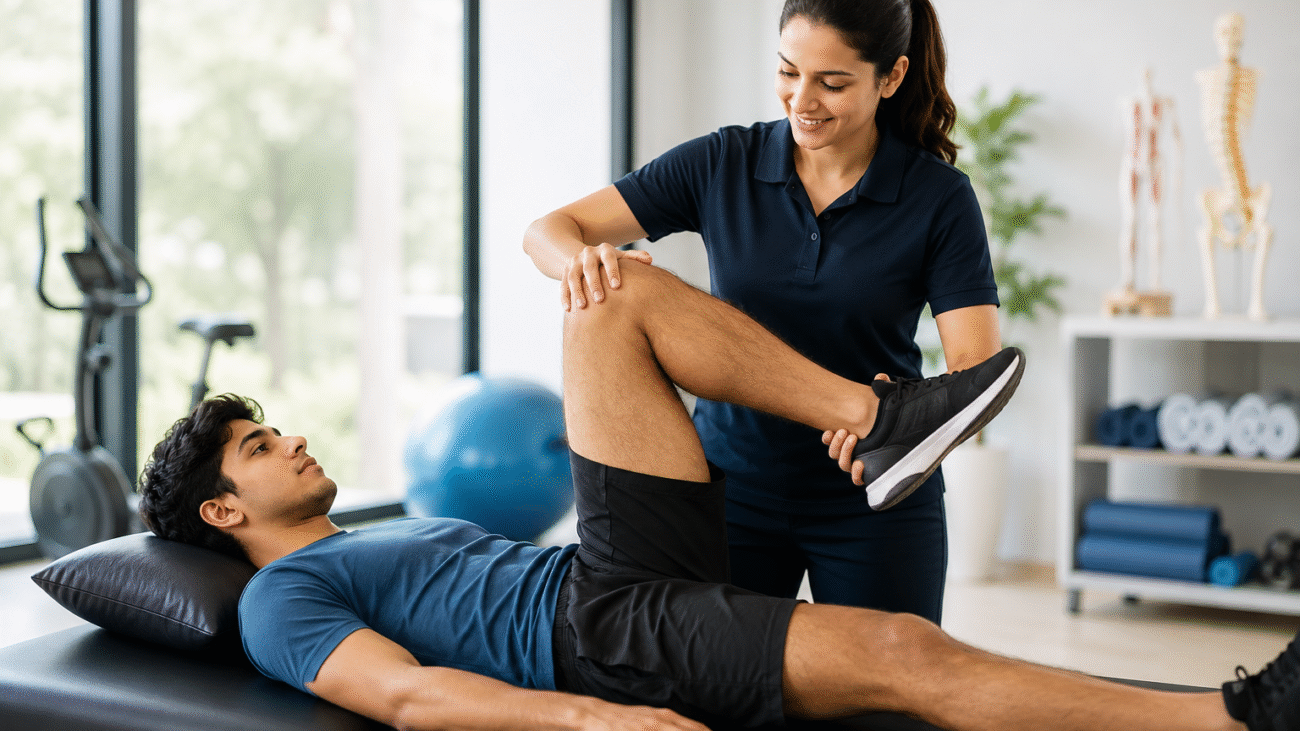
Most people know that physiotherapy is important after surgery. But very few know that physiotherapy before surgery — called prehabilitation, or “prehab” — can be just as important, if not more so.
The concept is simple: the stronger and more functional you are going into surgery, the faster and more completely you will recover coming out. Research has consistently demonstrated that patients who complete a structured prehabilitation program before elective surgery have shorter hospital stays, fewer complications, faster return to function, and better long-term outcomes.
At Rishaan Physio & Wellness Clinic in Mississauga, prehabilitation is a structured, evidence-based program we offer for patients awaiting orthopaedic, cardiac, abdominal, or other major surgical procedures.
Prehabilitation is a proactive rehabilitation program undertaken in the weeks or months before surgery with the goal of optimising your physical condition before your procedure. Think of it as building your body’s “reserve capacity” so that the inevitable physical stress of surgery and recovery has less impact.
Prehabilitation typically includes:
The research supporting prehabilitation has grown substantially over the past decade:
KNEE REPLACEMENT SURGERY
A landmark study published in the Journal of Bone and Joint Surgery (JBJS) found that patients who completed 4–8 weeks of prehabilitation before total knee replacement had significantly better knee function scores at 12 months post-surgery compared to those who did not. They also required less physiotherapy post-operatively.
HIP REPLACEMENT SURGERY
A systematic review published in Disability and Rehabilitation found that prehabilitation before total hip replacement improved post-operative function, reduced length of hospital stay, and decreased discharge to rehabilitation facilities — saving patients and the healthcare system significant resources.
ACL RECONSTRUCTION
Neuromuscular prehabilitation before ACL reconstruction has been shown to reduce post-operative quadriceps weakness and accelerate return to sport timelines.
ABDOMINAL AND CARDIAC SURGERY
Inspiratory muscle training and aerobic conditioning prehabilitation has been shown to reduce post-operative pulmonary complications — one of the leading causes of surgical morbidity — by up to 50% in high-risk patients.
CANCER SURGERY
Prehabilitation for patients undergoing cancer-related surgery (colorectal, breast, lung) has demonstrated improvements in functional capacity, quality of life, and tolerance of chemotherapy.
Prehabilitation is beneficial for virtually anyone facing elective surgery, but it is particularly recommended for:
JOINT REPLACEMENT PATIENTS
Total knee replacement, total hip replacement, and shoulder arthroplasty patients benefit enormously. Post-surgical outcomes correlate strongly with pre-surgical quadriceps strength (for knee replacement), hip abductor strength (for hip replacement), and rotator cuff function (for shoulder replacement).
ACL AND KNEE LIGAMENT RECONSTRUCTION
Athletes and active individuals awaiting ACL reconstruction should begin prehab immediately after injury to reduce the muscle wasting (atrophy) that begins within days.
SPINAL SURGERY (DISC REPLACEMENT, FUSION, DECOMPRESSION)
Core stability, hip flexibility, and postural training before spinal surgery reduce post-operative pain and improve functional recovery.
ROTATOR CUFF REPAIR
Strengthening the non-torn components of the rotator cuff and the scapular stabilisers before surgery significantly improves post-surgical shoulder function.
OLDER ADULTS (65+) FACING ANY MAJOR SURGERY
Frailty is one of the strongest predictors of poor surgical outcomes. Even a 4–6 week resistance training program before surgery can meaningfully improve strength, reduce frailty risk, and improve post-operative resilience.
PATIENTS WITH SIGNIFICANT WEIGHT OR COMORBIDITIES
Physiotherapy-supervised exercise before surgery helps manage weight, improve cardiovascular health, and reduce the risk of surgical complications in patients with diabetes, hypertension, or obesity.
STEP 1: INITIAL ASSESSMENT
Your physiotherapist at Rishaan Physio conducts a comprehensive pre-surgical assessment covering:
– Current strength, range of motion, and functional capacity
STEP 2: PERSONALISED PREHAB PROGRAM
Based on the assessment, we design a program specific to your surgery, timeframe, and baseline fitness. Most prehab programs run for 4–8 weeks at 2–3 sessions per week, with a robust home exercise component.
STEP 3: PROGRESS MONITORING
Your physiotherapist reassesses you every 2–4 weeks, progresses your exercises as appropriate, and communicates with your surgical team if needed.
STEP 4: PRE-SURGERY DEBRIEF
In the final week before surgery, your physiotherapist prepares you for what to expect: how to safely get up from a chair, how to use crutches or a walker, what movements to avoid post-operatively, and how quickly to expect your recovery to progress.
STEP 5: SEAMLESS TRANSITION TO POST-SURGICAL REHAB
At Rishaan Physio, your prehab physiotherapist becomes your post-surgical physiotherapist — providing continuity of care throughout your recovery. You will not need to re-explain your history or goals.
The ideal prehab window depends on your timeframe:
6–12 weeks before surgery: Optimal. Enough time to make meaningful strength and fitness gains.
4–6 weeks: Still very beneficial — focus on quality movement, pain management, and surgical preparation.
2–4 weeks: Short window but worthwhile — focus on education, movement training, and reducing pre-operative anxiety.
If you don’t know your surgery date yet, start prehab as soon as the procedure is scheduled. The waitlist for elective joint replacement in Ontario can extend to several months — this is actually an opportunity to arrive at surgery in the best possible condition.
Q: Is prehabilitation covered by insurance?
A: Yes — prehabilitation is physiotherapy and is covered by most extended health insurance plans under physiotherapy benefits.
Q: Will exercising before surgery make my pain worse?
A: This is a common concern but is rarely the case. Your physiotherapist will design exercises that strengthen the muscles around the affected joint without aggravating it. The program begins at an appropriate level for your current condition and progresses gradually.
Q: My surgeon hasn’t mentioned prehab — should I still do it?
A: Yes. Prehabilitation is still underprescribed in the Canadian healthcare system despite strong evidence. You do not need a specific referral from your surgeon — you can book at Rishaan Physio directly. If your surgeon wants to be informed, we are happy to send a progress report.
Q: I have been told to rest before surgery. Doesn’t prehab contradict this?
A: Rest is typically recommended to avoid aggravating the surgical site — not to avoid therapeutic exercise. There is a significant difference between protecting an injured joint and allowing full body deconditioning. Your physiotherapist will work within the parameters recommended by your surgeon.
Q: Can I do prehab if I’m in significant pain?
A: Yes. Pain management is incorporated into every prehabilitation program. Exercises are selected and modified to remain within a tolerable pain range while still providing therapeutic benefit.
Don’t let surgery happen to a deconditioned body. Arrive stronger and recover faster with prehabilitation at Rishaan Physio.
Rishaan Physio & Wellness Clinic
5105 Hurontario St, Unit 7, Mississauga, ON
Phone: (905) 800-1661
Website: rishaanphysio.com
Open 7 days a week | Free pickup & drop-off available
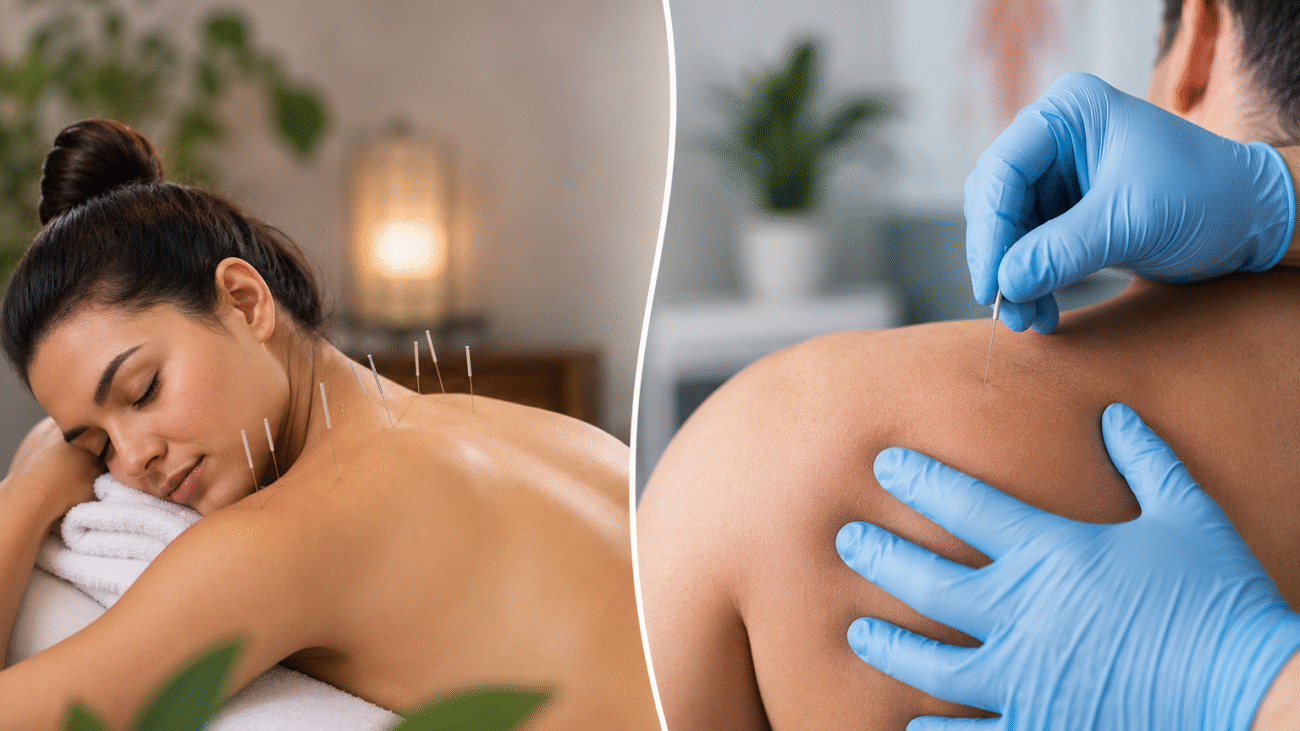
Two techniques. Both use fine needles. Both relieve pain. Yet acupuncture and dry needling are distinct practices rooted in entirely different theoretical frameworks and clinical approaches.
If you’ve been told you might benefit from one or the other — or you’re simply curious about the difference — this guide from Rishaan Physio & Wellness Clinic in Mississauga will give you a clear, honest comparison.
Acupuncture is a practice with roots in Traditional Chinese Medicine (TCM) dating back over 2,000 years. It is based on the concept of qi (life energy) flowing through meridians — specific pathways throughout the body. When qi flow is disrupted or blocked, pain and disease result. Needles inserted at specific acupuncture points along these meridians are believed to restore the flow of qi and bring the body back into balance.
Modern research has provided physiological explanations for acupuncture’s effects that complement the traditional framework:
WHAT TRADITIONAL ACUPUNCTURE TREATS:
Acupuncture has demonstrated effectiveness for a wide range of conditions, including:
Dry needling is a modern, Western physiotherapy technique that uses the same fine filament needles as acupuncture but is based on anatomy, neurophysiology, and musculoskeletal science rather than TCM theory.
Specifically, dry needling targets myofascial trigger points — tight, hypersensitive bands within muscle tissue (“knots”) that cause local pain and referred pain patterns. The needle is inserted directly into the trigger point, producing a “local twitch response” — an involuntary muscle contraction that resets the neuromuscular junction, releases the trigger point, and reduces pain.
At Rishaan Physio, dry needling is performed by registered physiotherapists who have completed post-graduate training in intramuscular stimulation (IMS) — a specific form of dry needling developed by Dr. Chan Gunn at the University of British Columbia.
WHAT DRY NEEDLING TREATS:
Dry needling is specifically effective for:
THEORETICAL BASIS
Acupuncture: Traditional Chinese Medicine — meridians, qi, energy balance
Dry Needling: Western anatomy and neurophysiology — trigger points, neuromuscular function
NEEDLE PLACEMENT
Acupuncture: Specific acupuncture points on meridian pathways (may be distant from the site of pain)
Dry Needling: Directly into myofascial trigger points in affected muscles
TARGET
Acupuncture: Systemic regulation — multiple body systems, not just pain
Dry Needling: Localised muscular dysfunction and pain
SENSATION DURING TREATMENT
Acupuncture: Dull ache (de qi) — often deeply relaxing
Dry Needling: Local twitch response — brief intense muscle cramp/twitch, followed by relaxation
TRAINING
Acupuncture: Provided by TCM practitioners (CTCMPAO regulated in Ontario) or physiotherapists with acupuncture training
Dry Needling/IMS: Provided by physiotherapists or other regulated health professionals with post-graduate needle therapy training
CONDITIONS TREATED
Acupuncture: Broader — pain, anxiety, insomnia, digestive issues, hormonal conditions, nausea
Dry Needling: More specific — musculoskeletal pain with trigger point component
NUMBER OF NEEDLES
Acupuncture: Typically 10–20 needles, retained for 20–30 minutes
Dry Needling: Fewer needles, shorter retention — often in and out within seconds per point
FOR MUSCULOSKELETAL PAIN WITH A CLEAR TRIGGER POINT COMPONENT
Choose dry needling (IMS). If you have a specific area of muscle tightness, a knot that won’t release, or referred pain from a trigger point, dry needling provides faster, more targeted relief for this mechanism.
FOR CHRONIC PAIN WITH ANXIETY, SLEEP ISSUES, OR SYSTEMIC SYMPTOMS
Choose acupuncture. If your pain is accompanied by high stress, poor sleep, digestive issues, or other systemic complaints, acupuncture addresses the whole-body dimension that dry needling does not.
FOR HEADACHES AND NECK PAIN
Either — or both. Cervicogenic headaches with muscle trigger point components respond very well to dry needling. Migraine and tension headaches with systemic components may respond better to acupuncture, or a combination of both.
FOR POST-SURGICAL MUSCLE GUARDING
Choose dry needling. Muscles that have gone into protective spasm after surgery respond well to IMS at Rishaan Physio.
THE GOOD NEWS: You don’t always have to choose.
At Rishaan Physio in Mississauga, our team includes practitioners trained in both acupuncture and IMS/dry needling. Depending on your assessment findings, your physiotherapist may incorporate elements of both approaches in a single treatment plan.
Yes — and this is important to understand:
Acupuncture typically feels relaxing. The sensation during needle retention (de qi) is a dull, heavy ache that most patients find deeply calming. Many patients fall asleep during acupuncture sessions.
Dry needling is more intense in the moment. The local twitch response is a brief, involuntary muscle cramp that can feel surprising or uncomfortable for a second — but is followed almost immediately by a deep muscle release. Post-treatment soreness (like post-workout muscle ache) is common for 24–48 hours and is a sign that the technique is working.
Q: Is dry needling the same as acupuncture?
A: No — they use the same type of needle but are entirely different in theory, technique, and target. Acupuncture follows TCM meridian theory; dry needling follows Western neuromuscular anatomy and targets trigger points.
Q: Are both safe?
A: Yes — both are safe when performed by trained, regulated practitioners using sterile, single-use needles. At Rishaan Physio, all needle therapies are performed under strict infection control protocols.
Q: Is dry needling painful?
A: The local twitch response feels like a brief, intense muscle cramp — most patients describe it as strange rather than painful. The duration is typically less than a second. Post-treatment muscle soreness for 24–48 hours is normal.
Q: Which one is covered by insurance?
A: Both are typically covered under extended health insurance. Acupuncture by a registered acupuncturist is covered under acupuncture benefits. Dry needling performed as part of physiotherapy is covered under physiotherapy benefits. Check your specific plan.
Q: How many sessions will I need?
A: Most patients see meaningful improvement in 4–6 sessions of dry needling for trigger point conditions. Acupuncture for systemic conditions typically requires 8–10 sessions for a full course.
Not sure which is right for you? Book an assessment at Rishaan Physio — our team will assess your condition and recommend the most appropriate approach.
Rishaan Physio & Wellness Clinic
5105 Hurontario St, Unit 7, Mississauga, ON
Phone: (905) 800-1661
Website: rishaanphysio.com
Open 7 days a week | Free pickup & drop-off
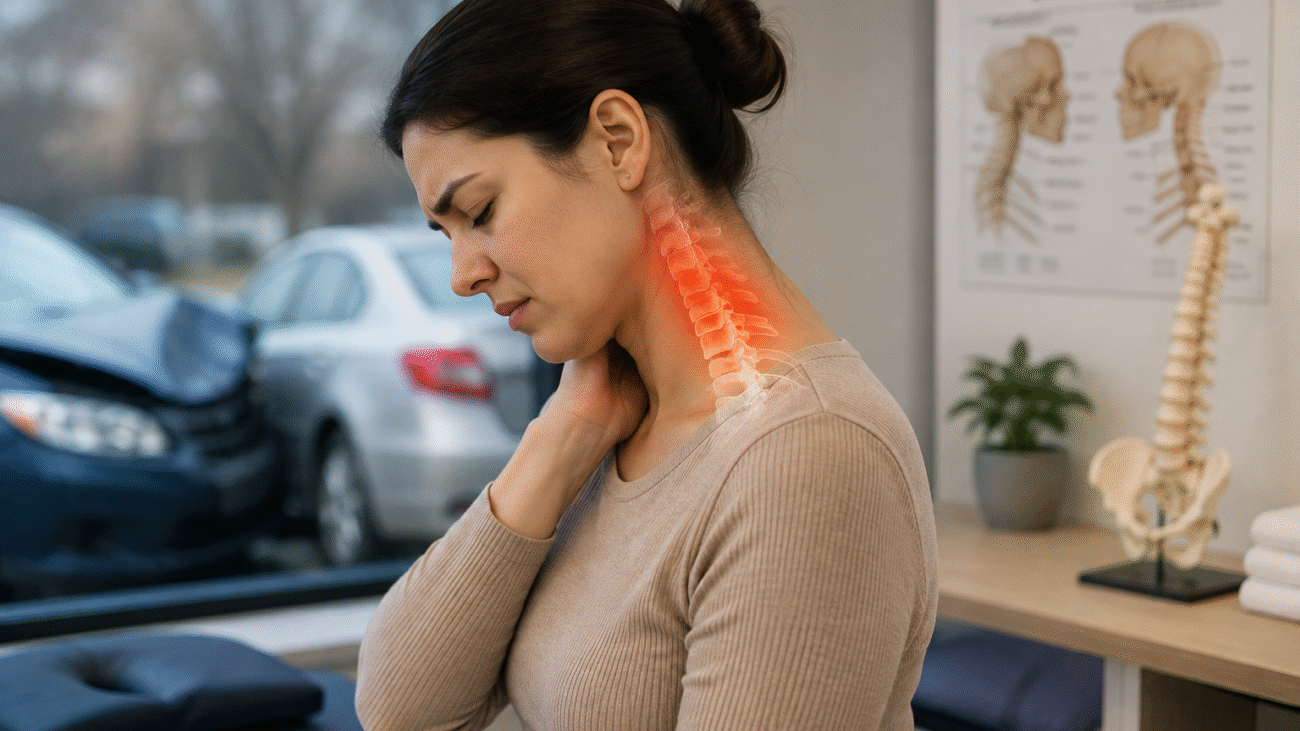
Car accidents happen every day on Mississauga’s busy roads — Hurontario, Highway 401, Eglinton, Dixie. And even low-speed collisions can cause whiplash — a soft tissue injury that, left untreated, can become a source of chronic pain for months or years.
If you’ve been in a motor vehicle accident and are experiencing neck pain, headaches, shoulder stiffness, or dizziness, physiotherapy is one of the most effective and evidence-supported treatments available. At Rishaan Physio & Wellness Clinic in Mississauga, we have extensive experience managing whiplash-associated disorders (WAD) and helping patients recover fully through MVA insurance.
Here’s everything you need to know about whiplash injury, physiotherapy treatment, and your rights as an accident victim in Ontario.
Whiplash — medically known as whiplash-associated disorder (WAD) — is an injury caused by a sudden, forceful back-and-forth movement of the neck, most commonly resulting from rear-end car collisions. The rapid acceleration-deceleration forces overstress the cervical spine’s soft tissues — muscles, ligaments, tendons, discs, and nerves.
Common symptoms include:
Symptoms may begin immediately after the accident or may be delayed by 12–24 hours. If you’ve been in an accident, do not wait for symptoms to worsen before seeking assessment.
Research consistently shows that the outcome from whiplash injury is significantly better when physiotherapy begins early — within the first 2 weeks post-accident. Early intervention:
Delaying treatment — even for a few weeks — allows scar tissue to form, muscle imbalances to develop, and the nervous system to sensitise to pain, all of which significantly prolong recovery.
The Quebec Task Force classification system grades WAD as follows:
Grade 0: No complaints or physical signs (no injury)
Grade 1: Neck complaint only — no physical signs on examination. Ache, stiffness, or tenderness without objective findings.
Grade 2: Neck complaint + musculoskeletal signs (reduced range of motion, point tenderness). Most common clinical presentation.
Grade 3: Neck complaint + neurological signs (reduced or absent deep tendon reflexes, weakness, sensory deficits).
Grade 4: Neck complaint + fracture or dislocation (requires immediate medical referral).
Physiotherapy is the primary treatment for Grade 1–3 WAD. Grade 4 requires orthopaedic or neurosurgical assessment.
At Rishaan Physio in Mississauga, our whiplash rehabilitation program includes:
ACUTE PHASE (Weeks 1–3)
REHABILITATION PHASE (Weeks 3–12)
RETURN TO FUNCTION (Weeks 8–16+)
In Ontario, your auto insurance policy includes Statutory Accident Benefits (SABS) that cover physiotherapy for injuries sustained in a motor vehicle accident — regardless of who was at fault.
Key points for Ontario MVA patients:
At Rishaan Physio, we handle MVA insurance billing directly and work with accident benefit adjusters to ensure you receive the treatment you are entitled to. You will not pay out of pocket for approved treatment under your MVA claim.
WHAT TO DO AFTER A CAR ACCIDENT:
1. Seek medical attention — visit your family physician or a walk-in clinic immediately after the accident. Document your symptoms.
2. Report the accident to your insurance company — typically required within 7 days.
3. Book your physiotherapy assessment — the sooner the better. Call Rishaan Physio at (905) 800-1661. We will guide you through the MVA claims process.
4. Keep records — document your symptoms, activity limitations, and treatment visits.
If your whiplash injury occurred as a result of a workplace vehicle accident (e.g., a collision while driving for work), your claim would typically be managed through WSIB rather than auto insurance. Rishaan Physio is an approved WSIB physiotherapy provider in Mississauga.
Q: How long does whiplash take to heal with physiotherapy?
A: Grade 1–2 WAD typically resolves in 6–12 weeks with appropriate physiotherapy. Grade 3 WAD (with neurological signs) may take 3–6 months. Research shows that approximately 50% of Grade 2 WAD patients achieve full recovery within 3 months with early physiotherapy.
Q: Should I wear a neck collar after a whiplash injury?
A: Current evidence does not support prolonged cervical collar use for whiplash. A collar used for more than a few days can actually slow recovery by preventing the movement necessary for tissue healing. Your physiotherapist will guide appropriate activity levels instead.
Q: Can whiplash cause permanent damage?
A: The majority of whiplash injuries resolve fully with appropriate treatment. A minority of patients — particularly those with Grade 3 injuries or who received delayed treatment — develop chronic whiplash-associated disorder. Early, evidence-based physiotherapy is the most effective strategy for preventing chronicity.
Q: My accident was minor and I feel okay — should I still see a physiotherapist?
A: Yes. Symptoms can be delayed by 12–24 hours after a whiplash injury as inflammation develops. A physiotherapy assessment shortly after the accident provides a clinical baseline, identifies subclinical dysfunction that may become symptomatic, and creates a documented treatment record.
Q: Do I need a referral to claim physiotherapy under MVA insurance?
A: No. In Ontario, you can access physiotherapy directly without a physician referral and have it covered under your SABS benefit. Contact your insurance adjuster and Rishaan Physio together to initiate the process.
Don’t let whiplash become chronic pain. Contact Rishaan Physio & Wellness Clinic immediately after your accident — we’ll handle the insurance paperwork and focus on getting you better.
Rishaan Physio & Wellness Clinic
5105 Hurontario St, Unit 7, Mississauga, ON
Phone: (905) 800-1661
Website: rishaanphysio.com
Open 7 days a week | MVA & WSIB direct billing | Free pickup & drop-off