
Learn how much custom orthotics cost in Ontario, whether insurance covers them, what insurers require for claims, how long orthotics last, and how to make the most of your extended health benefits in Mississauga.
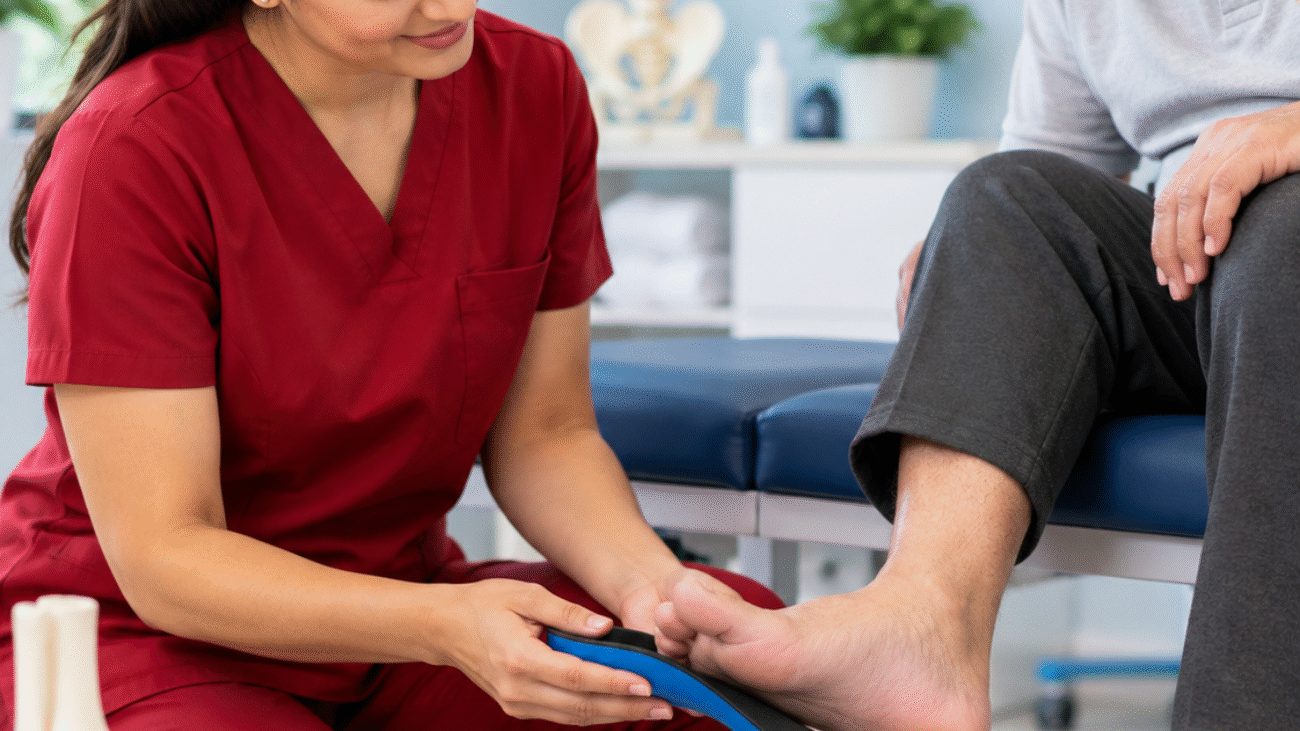
Learn how much custom orthotics cost in Ontario, whether insurance covers them, what insurers require for claims, how long orthotics last, and how to make the most of your extended health benefits in Mississauga.
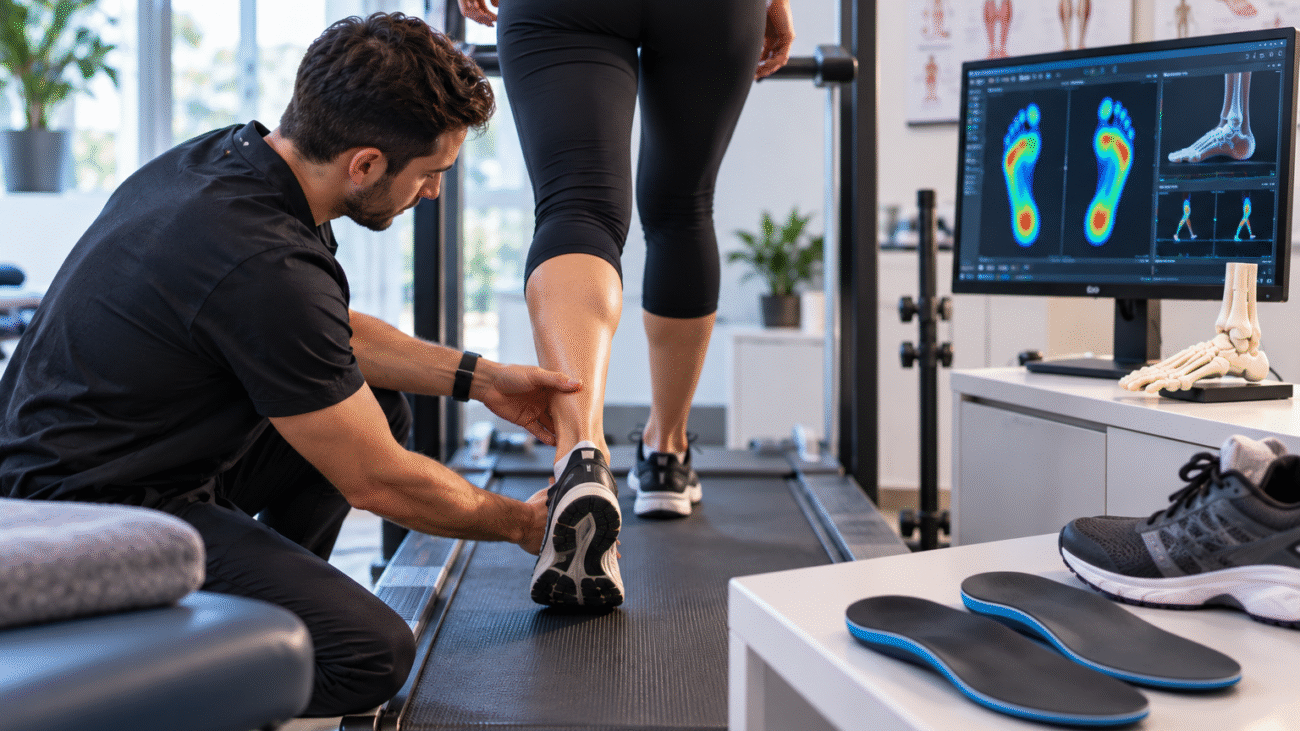
Custom orthotics can help runners manage recurring injuries linked to overpronation and poor foot mechanics. Learn how gait analysis, proper footwear, and personalized orthotics can support better alignment, reduce strain, and help you run more comfortably.
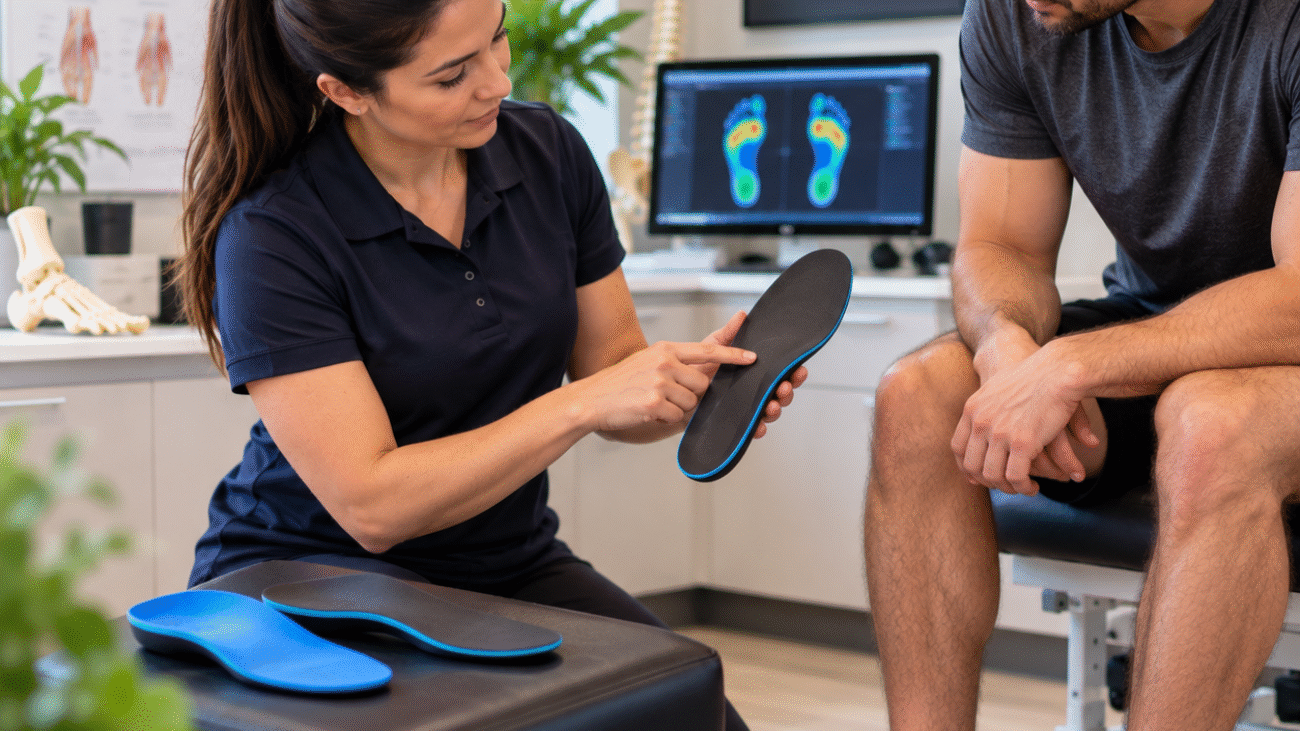
Do custom orthotics really help with flat feet? Learn how they can support the arch, improve foot alignment, reduce pain, and when they may be the right choice for you.
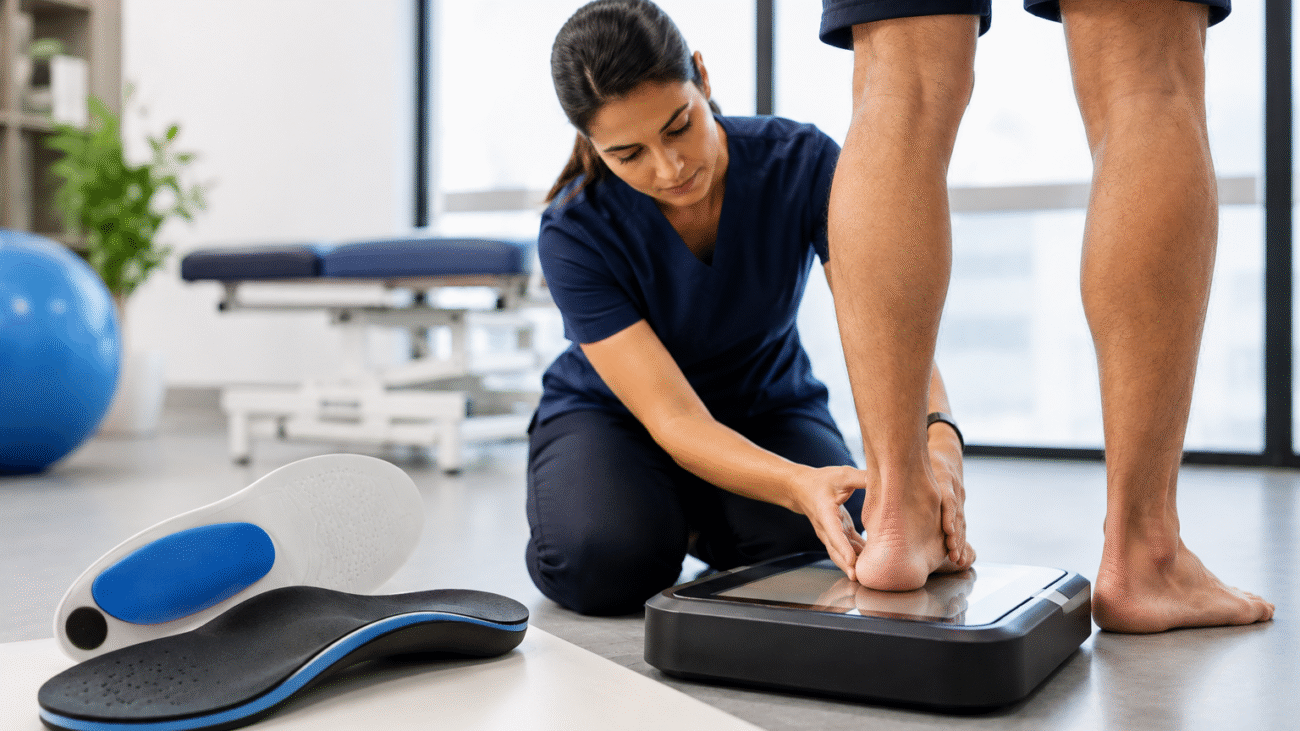
Your feet carry your entire body weight — every step, every day. When something isn’t working properly in the foot’s biomechanical structure, the effects ripple upward through the ankles, knees, hips, and lower back. Often, people manage these symptoms with painkillers, activity avoidance, or store-bought insoles — without ever addressing the underlying foot mechanics.
Custom orthotics — medical insoles prescribed and fabricated specifically for your foot structure — can correct these mechanics and provide relief for a surprising range of conditions. But how do you know if you actually need them?
Here are 7 signs that it may be time for a custom orthotic assessment at Rishaan Physio & Wellness Clinic in Mississauga.
If your first steps in the morning feel like walking on broken glass — intense heel pain that gradually eases as you walk around — you are likely experiencing plantar fasciitis. This is the most common cause of heel pain in adults, affecting approximately 10% of people during their lifetime.
Plantar fasciitis is almost always driven by abnormal foot mechanics — most commonly overpronation (the foot rolling inward excessively), which places repetitive excessive tension on the plantar fascia. Custom orthotics that control rearfoot pronation and provide a dedicated plantar fascia off-loading groove are one of the most effective conservative treatments available.
Multiple systematic reviews confirm that custom orthotics are significantly more effective than prefabricated insoles for plantar fasciitis.
Turn your shoes over and look at the wear pattern on the soles. Normal wear is moderate and relatively even, concentrated at the heel and ball of the foot.
Heavy wear on the inner heel and ball = overpronation (flat foot mechanics)
Heavy wear on the outer edge = supination / underpronation
Uneven wear is a visible sign of biomechanical abnormality. Without correction, this uneven loading is transmitted to your joints — particularly the knees, hips, and lower back — increasing wear and the risk of injury.
Patellofemoral pain syndrome (PFPS), commonly called “runner’s knee,” causes pain around or behind the kneecap — particularly with stairs, squatting, or prolonged sitting. It’s extremely common in runners, hikers, and people who stand for long hours.
The connection to your feet: overpronation causes the tibia (shin bone) to rotate inward, which in turn causes the kneecap to track abnormally, creating friction and pain. Custom orthotics that correct rearfoot mechanics reduce this abnormal tibial rotation and significantly decrease PFPS symptoms.
Research published in the British Journal of Sports Medicine demonstrates that custom orthotics significantly outperform flat insoles and stretching alone for patellofemoral pain.
Lower back pain that has persisted despite physiotherapy, massage, and spinal treatment — and has no clear disc, joint, or nerve cause identified on imaging — may have a biomechanical foot/leg origin.
A leg length discrepancy of as little as 6mm creates pelvic tilt, lumbar scoliosis, and compensatory muscle patterns that manifest as lower back pain. Overpronation of one foot can functionally shorten that leg, mimicking a structural length discrepancy.
If your physiotherapist identifies this pattern, a custom orthotic with a heel lift can correct the discrepancy and resolve the resulting lumbar symptoms.
If your feet ache, throb, or feel fatigued after a day of standing — in a profession requiring prolonged time on your feet (healthcare, retail, hospitality, construction) — your feet are absorbing forces that your foot structure is not adequately equipped to distribute.
Custom orthotics redistribute pressure across the entire plantar surface of the foot, reducing localised overloading of the metatarsals, heel, or arch. Many patients in these professions find that custom orthotics eliminate foot fatigue and pain almost entirely.
FLAT FEET (Pes Planus)
Flat feet (absent or collapsed arch) are a common finding in both children and adults. Not all flat feet are symptomatic — but when they are associated with pain, fatigue, or instability, custom orthotics provide structural support that cannot be replicated by standard footwear.
HIGH ARCHES (Pes Cavus)
Feet with very high arches have rigid structures that absorb shock poorly, concentrating impact on the heel and ball of the foot. This predisposes to stress fractures, plantar fasciitis, Achilles tendinopathy, and ankle instability. Custom orthotics with appropriate cushioning and lateral posting address the specific biomechanics of a cavus foot — something store-bought cushioning insoles cannot adequately do.
Recurrent ankle sprains suggest chronic lateral ankle instability — ligament laxity on the outer side of the ankle that predisposes the joint to rolling. While physiotherapy for ankle strengthening and proprioception training is the primary treatment, custom orthotics that post the lateral heel and improve rearfoot alignment reduce the tendency for the ankle to roll, providing an external stability supplement.
If you’ve sprained the same ankle more than once, a combined approach of physiotherapy and custom orthotics is strongly recommended.
At Rishaan Physio in Mississauga, a custom orthotic assessment takes approximately 45 minutes and includes:
– Full lower limb biomechanical assessment (foot structure, ankle mobility, knee alignment, hip mechanics, gait analysis)
– Identification of the specific biomechanical dysfunction driving your symptoms
– Discussion of the type of orthotic most appropriate for your condition, footwear, and activity level
– Foot casting or 3D scanning
– Prescription and laboratory order
Orthotics typically arrive within 2–3 weeks. At the fitting appointment, your physiotherapist ensures correct fit, explains the break-in protocol, and assesses your gait with the devices in place.
Most extended health insurance plans in Ontario include custom orthotic coverage of $200–$500 per year. At Rishaan Physio, we provide all required documentation (biomechanical assessment report, prescription) for your insurance claim and offer direct billing where available.
Q: Do I really need custom orthotics or will store-bought insoles work?
A: It depends on your specific condition and biomechanics. If you have significant structural foot abnormalities, a diagnosed condition like plantar fasciitis or PFPS, or multiple failed attempts with OTC insoles, custom orthotics are very likely to provide superior results. A professional assessment is the only way to know for certain.
Q: How long until I feel a difference with custom orthotics?
A: Most patients feel improvement within 2–6 weeks of consistent use. A break-in period is normal — start wearing orthotics for 1–2 hours per day and gradually increase use over 1–2 weeks.
Q: Will custom orthotics weaken my feet?
A: No — this is a common misconception. Custom orthotics are used alongside a strengthening program, not as a replacement for it. They correct position while exercises build the strength to maintain that position over time.
Q: Do orthotics go in any type of shoe?
A: Custom orthotics can typically be transferred between shoes of similar types. Running shoes, walking shoes, and casual shoes with removable insoles accommodate most orthotics. Dress shoes and very flat shoes may require slimmer orthotic designs.0
Rishaan Physio & Wellness Clinic
5105 Hurontario St, Unit 7, Mississauga, ON
Phone: (905) 800-1661
Website: rishaanphysio.com
Open 7 days a week | Direct billing available | Free pickup & drop-off
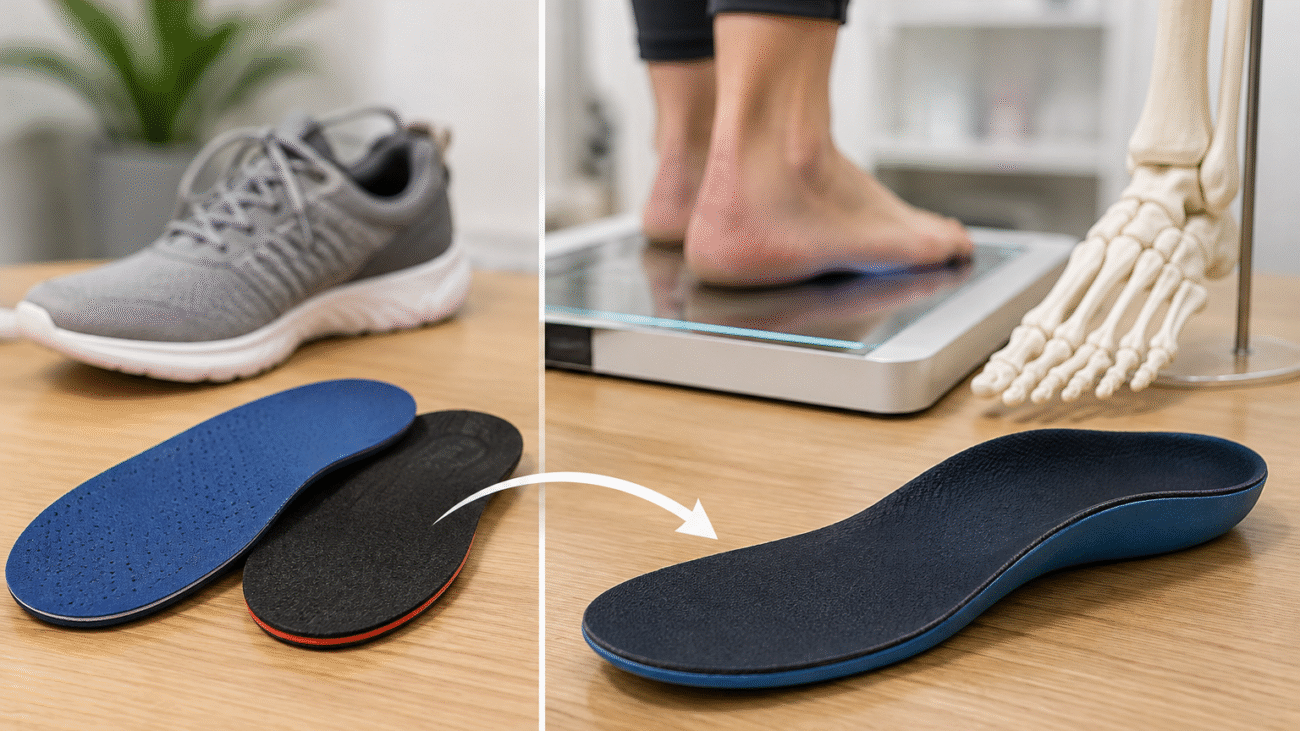
You’re standing in a pharmacy, looking at a rack of insoles ranging from $15 to $85. They promise arch support, cushioning, and relief from foot pain. Meanwhile, your physiotherapist has recommended custom orthotics — and the price difference is significant.
So what’s the real difference between custom orthotics and store-bought insoles? And how do you know which one you actually need?
At Rishaan Physio & Wellness Clinic in Mississauga, we prescribe custom orthotics as part of our treatment plans for a wide range of conditions — from plantar fasciitis to knee pain to lower back dysfunction. Here’s an honest, evidence-based comparison.
Over-the-counter (OTC) insoles are prefabricated, mass-produced foot supports designed for general foot shapes. They come in different sizes and sometimes different arch height categories (low, medium, high), and they are made from foam, gel, or a combination of materials.
What they can do:
What they cannot do:
Custom orthotics are medical devices prescribed and fabricated specifically for your feet and your gait pattern. At Rishaan Physio in Mississauga, the custom orthotic process involves:
1. Comprehensive biomechanical assessment
Your physiotherapist assesses your foot structure, arch height, rearfoot alignment, ankle mobility, knee alignment, hip mechanics, and walking pattern (gait analysis). This gives us a complete picture of how your entire lower limb functions — not just your foot in isolation.
2. Foot casting or 3D scanning
A precise cast or 3D digital scan is taken of your feet in the subtalar neutral position — the functional position in which the foot is biomechanically most efficient. This captures the exact geometry of your foot.
3. Laboratory fabrication
The orthotic is fabricated by a certified orthotics laboratory from materials selected based on your weight, activity level, and condition. The device is designed to achieve specific biomechanical corrections unique to your assessment findings.
4. Fitting and follow-up
When your orthotics arrive, your physiotherapist ensures they fit correctly and makes any necessary adjustments. A follow-up assessment confirms the expected biomechanical improvements.
CUSTOMISATION
Store-bought: Generic shape for average foot geometry
Custom: Fabricated to your precise foot shape and biomechanics
BIOMECHANICAL CORRECTION
Store-bought: Minimal — cushioning only
Custom: Addresses specific pathologies — overpronation, supination, plantar fasciitis, etc.
MATERIAL AND DURABILITY
Store-bought: Foam or gel — typically lasts 6–12 months before compression
Custom: Rigid or semi-rigid shell with cushioning top cover — typically lasts 3–5 years
PRESCRIPTION-BASED
Store-bought: No professional assessment required
Custom: Prescribed by a regulated health professional following clinical assessment
INSURANCE COVERAGE
Store-bought: Not covered
Custom: Covered by most extended health plans in Ontario (typically $200–$500 per year)
COST
Store-bought: $15–$90
Custom: $400–$600 (largely offset by insurance for most patients with benefits)
Store-bought insoles can be genuinely helpful in specific situations:
Custom orthotics are clinically indicated when:
PLANTAR FASCIITIS
The plantar fascia — the band of tissue on the bottom of your foot — is stressed by abnormal foot mechanics. Custom orthotics that control rearfoot pronation and off-load the plantar fascia are one of the most effective conservative treatments for chronic plantar fasciitis. Multiple clinical trials show custom orthotics superior to OTC insoles for this condition.
PATELLOFEMORAL PAIN SYNDROME (RUNNER’S KNEE)
Overpronation of the foot causes internal rotation of the tibia and femur, increasing compressive forces on the kneecap. Custom orthotics correct this mechanical chain and significantly reduce anterior knee pain.
ACHILLES TENDINOPATHY
A heel lift integrated into custom orthotics reduces tensile load on the Achilles tendon during the acute phase of treatment.
LOWER BACK PAIN FROM LEG LENGTH DISCREPANCY
A structural leg length difference of as little as 6mm can cause significant pelvic tilt and lumbar compensations. Custom orthotics with a heel lift on the shorter side correct this discrepancy and reduce lumbar loading.
DIABETIC FOOT CONDITIONS
Diabetic patients require custom orthotics to redistribute pressure across the foot, reducing the risk of ulceration and skin breakdown.
OVERPRONATION OR SUPINATION
Significant rearfoot valgus (pronation) or varus (supination) requires a structured custom device to control joint motion — not just cushioning.
The honest answer is: get assessed. A comprehensive biomechanical assessment at Rishaan Physio in Mississauga takes approximately 45 minutes and gives you a clear clinical picture of your foot mechanics and whether custom orthotics are genuinely indicated for your condition.
We will never recommend custom orthotics unless your assessment findings support their use. If a store-bought insole will serve your needs, we’ll tell you that too.
Most extended health insurance plans in Ontario cover custom orthotics, provided they are:
At Rishaan Physio, we provide all required documentation for insurance claims and offer direct billing where available. Our team will help you maximise your annual orthotic benefit.
Q: How long do custom orthotics last?
A: With proper care, custom orthotics typically last 3–5 years. The top cover cushioning may need replacing after 1–2 years. Children’s orthotics typically need replacement more frequently as their feet grow.
Q: Do I need a prescription for custom orthotics?
A: In Ontario, custom orthotics must be prescribed by a regulated health professional (physiotherapist, chiropodist, or physician) to qualify for insurance reimbursement. An assessment is required regardless.
Q: Will I feel immediate improvement with custom orthotics?
A: It typically takes 2–4 weeks to fully break in custom orthotics and notice the full therapeutic benefit. Some patients feel immediate improvement; others go through an adjustment period. Your physiotherapist will guide you through the break-in protocol.
Q: Can I use custom orthotics in multiple pairs of shoes?
A: Yes — most custom orthotics are designed to be transferred between shoes of similar types (e.g., running shoes, dress shoes). We can discuss footwear compatibility at your assessment.
Rishaan Physio & Wellness Clinic
5105 Hurontario St, Unit 7, Mississauga, ON
Phone: (905) 800-1661
Website: rishaanphysio.com
Open 7 days a week | Direct billing available