
Hockey puts intense stress on the body through skating, sudden stops, collisions, and repetitive movements. Learn about the most common hockey injuries, including groin strains, hip and knee injuries, shoulder problems, concussions, and back pain, and how physiotherapy can help players recover safely and return to the ice.
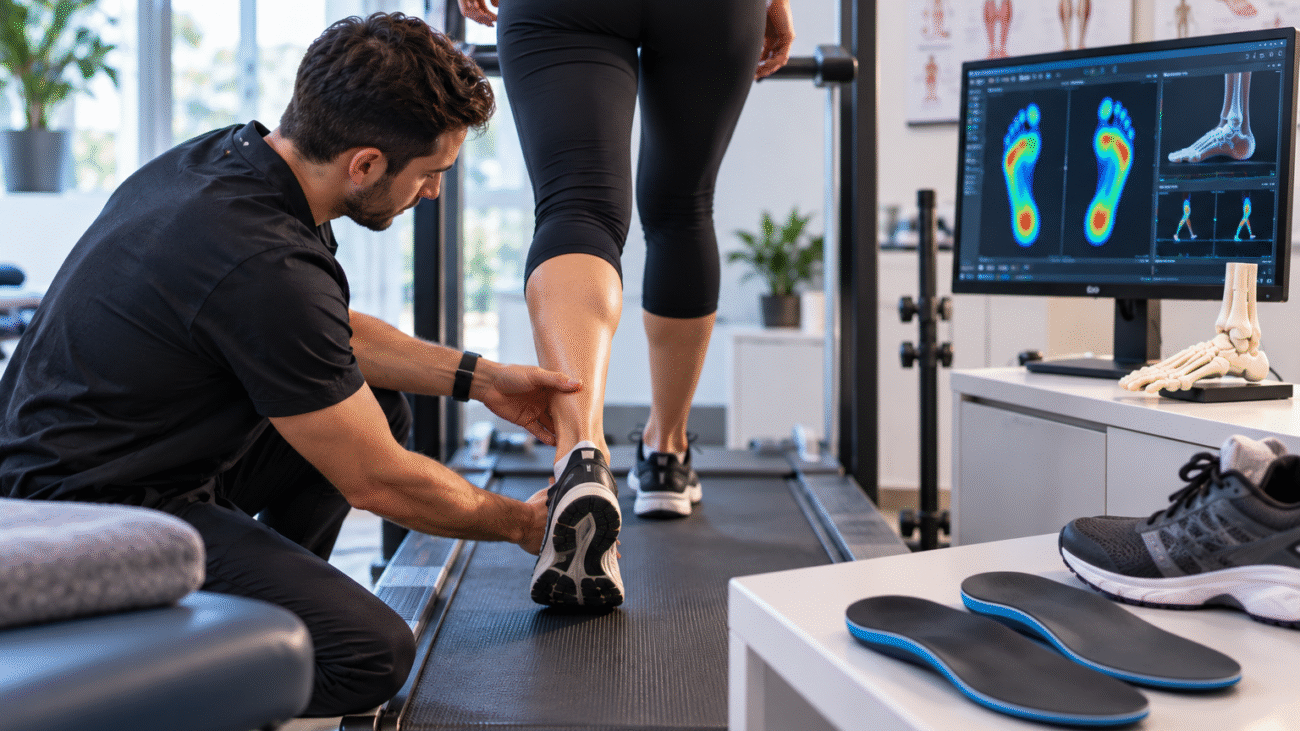
Custom Orthotics for Runners — Shin Splints, Knee Pain & Overpronation
Custom orthotics can help runners manage recurring injuries linked to overpronation and poor foot mechanics. Learn how gait analysis, proper footwear, and personalized orthotics can support better alignment, reduce strain, and help you run more comfortably.
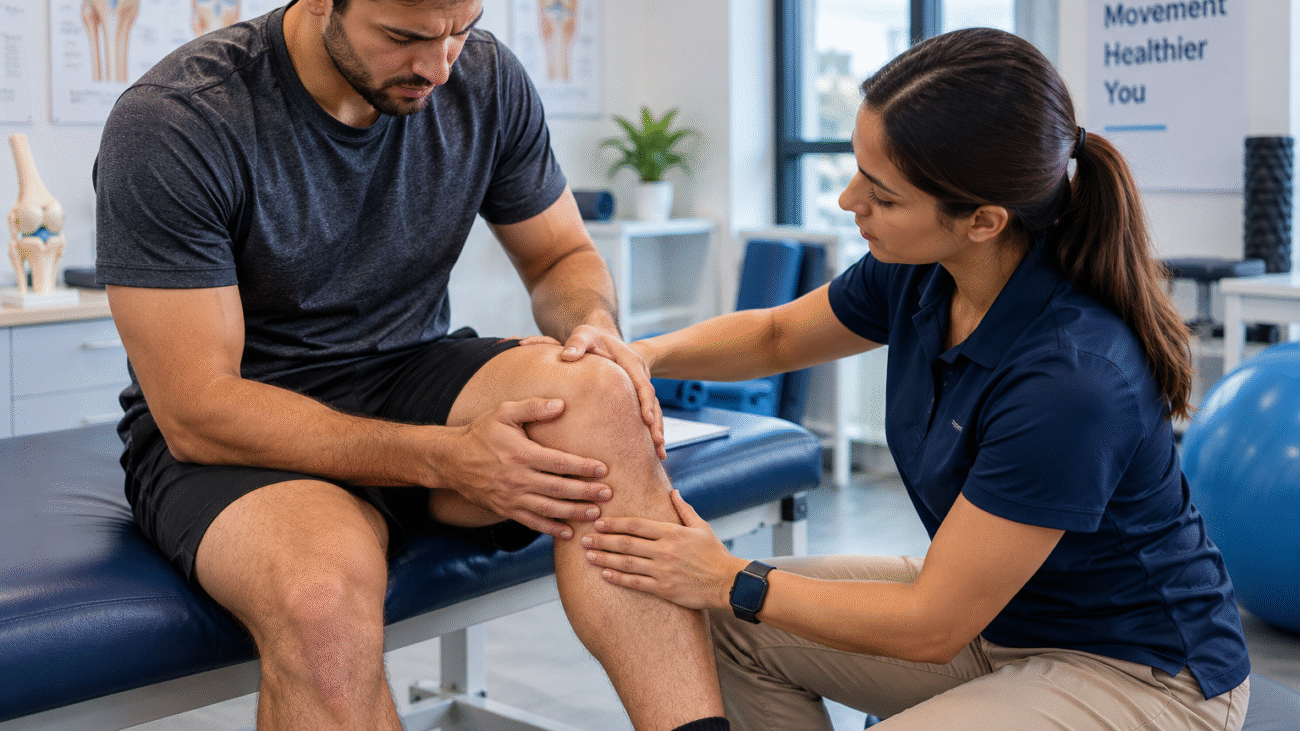
ACL Injury Rehab in Mississauga — Before & After Surgery
ACL injury? Start rehab now — not after surgery.
Sports physiotherapy in Mississauga • Direct billing • Same-day assessments • Open 7 days • Hurontario & Eglinton
Call (905)-800-1661
Call (905)-800-1661
Few injuries change an athlete’s season — or year — like a torn anterior cruciate ligament (ACL). It happens in a split second: a sudden pivot on the soccer pitch, an awkward landing on the basketball court, a skate catching on the ice. Then comes the swelling, the instability, and a long list of questions about surgery, timelines, and whether you will ever play the same way again.
At Rishaan Physio & Wellness Clinic in Mississauga, we guide ACL patients through the entire journey — from the first days after injury, through pre-surgery preparation, post-operative recovery, and finally the return to sport. Here is what that process looks like and why the work you do before surgery matters as much as what you do after.
What Is the ACL and How Does It Get Injured?
The ACL is one of the two cruciate ligaments inside the knee. It runs diagonally through the joint and prevents the shin bone from sliding forward and rotating excessively under the thigh bone. It is the key stabilizer for cutting, pivoting, and landing.
Most ACL tears are non-contact: about 70% happen without anyone touching the athlete. Typical mechanisms include:
- Planting the foot and rapidly changing direction
- Landing from a jump with the knee straight or collapsing inward
- Sudden deceleration
- A direct blow to the outside of the knee (contact injuries, common in hockey and football)
Athletes in soccer, basketball, hockey, skiing, and volleyball are at highest risk, and female athletes tear their ACL at significantly higher rates than males in the same sports, largely due to differences in landing mechanics and muscle control.
Signs You May Have Torn Your ACL
- A loud “pop” at the moment of injury
- Rapid swelling within a few hours
- A feeling that the knee is unstable or “gives way”
- Inability to continue playing
- Pain and difficulty fully straightening or bending the knee
An ACL tear is confirmed by clinical tests and, usually, an MRI ordered by your physician or orthopaedic surgeon. Other structures — the meniscus, MCL, or cartilage — are frequently injured at the same time and affect the rehab plan.
Surgery or No Surgery?
Not every ACL tear requires reconstruction. The decision depends on your age, activity level, knee stability, and other injuries present. Athletes who want to return to pivoting sports usually need surgery; some less active individuals can do well with a structured rehabilitation program alone. Your surgeon makes the final recommendation, but either way, physiotherapy is the foundation of recovery.
Waiting for surgery? Don’t waste those weeks.
Book a prehab assessment — stronger going in means faster coming out.
Call (905)-800-1661
Call (905)-800-1661
Phase 1: Prehab — Physiotherapy Before ACL Surgery
In Ontario, the wait between injury and surgery is often several weeks to a few months. Research consistently shows that patients who enter surgery with a calm knee, full extension, and strong quadriceps recover faster and reach better outcomes. Prehab focuses on:
- Reducing swelling — ice, compression, elevation, and gentle movement
- Restoring full range of motion — especially full knee extension, which is harder to regain after surgery if it is lost before
- Waking up the quadriceps — the quads “switch off” after an ACL injury; re-activating them early prevents severe weakness post-op
- Maintaining strength in the hips, hamstrings, and calves
- Normalizing your walking pattern
- Preparing you mentally for the post-op process so nothing is a surprise
Learn more about the benefits of preparing your body for surgery in our guide to prehabilitation physiotherapy.
Phase 2: Post-Surgery Rehab — A Week-by-Week Guide
ACL reconstruction rehab typically lasts 9 to 12 months. Timelines vary with the surgeon’s protocol, graft type, and any additional repairs, but the general progression looks like this:
Weeks 0–2: Protect and settle
Control swelling and pain, achieve full extension, begin gentle bending, activate the quadriceps, and walk with crutches as directed. Early, careful movement is critical — a stiff knee at this stage causes problems for months.
Weeks 2–6: Restore movement and basic strength
Progress to full range of motion, wean off crutches, normalize gait, and begin closed-chain strengthening — mini squats, leg press, step-ups, and stationary cycling.
Weeks 6–12: Build strength and control
Heavier strengthening of quads, hamstrings, and glutes; balance and proprioception training; introduction of low-impact cardio. Single-leg control becomes the focus.
Months 3–6: Power and agility
Begin jogging once strength criteria are met (typically 70–80% of the uninjured leg), then progress to jumping, landing mechanics, and controlled change-of-direction drills.
Months 6–9+: Sport-specific training and return to play
High-intensity plyometrics, cutting, and sport-specific drills. Return to competition is based on objective testing — strength symmetry, hop tests, and movement quality — not just the calendar. Most surgeons and physiotherapists recommend a minimum of 9 months before returning to pivoting sports, as re-injury risk drops significantly with each additional month.
Non-Surgical ACL Rehab
For patients managing an ACL tear without surgery, the program follows a similar structure but places even greater emphasis on strength, neuromuscular control, and learning to stabilize the knee dynamically. Bracing and activity modification may be part of the plan. Many patients return to running, cycling, and straight-line sport successfully; pivoting sports remain higher risk.
Reducing the Risk of Re-Injury
The biggest concern after ACL recovery is a second tear — in the same knee or the other one. Rehab at Rishaan Physio includes:
- Landing and cutting technique retraining
- Hip and core strength to control knee alignment
- Objective testing before clearance to play
- A maintenance program to continue after discharge
Athletes who complete a full, criteria-based program have significantly lower re-injury rates than those who return early.
Supporting Treatments During ACL Recovery
- Registered massage therapy — for tight hamstrings, calves, and hip muscles that compensate during recovery
- Acupuncture — for pain control and stubborn quadriceps inhibition
- Custom orthotics — for athletes whose foot mechanics contribute to knee collapse
Why Choose Rishaan Physio for ACL Rehab in Mississauga
- Physiotherapists experienced in sports injury rehabilitation and post-surgical recovery
- Structured, criteria-based programs — you progress when your knee is ready, not on a fixed date
- Coordination with your surgeon’s protocol
- Direct billing to extended health plans, and coverage for sport, WSIB, and MVA-related injuries
- Open 7 days a week — rehab fits around school, work, and training
- Free pickup and drop-off — essential in the weeks when you cannot drive
- Unit 7, 5105 Hurontario Street, Mississauga — Hurontario & Eglinton
Frequently Asked Questions
How soon after ACL surgery should I start physiotherapy?
Within the first few days. Early physiotherapy controls swelling, protects range of motion, and reactivates the quadriceps — all critical to a smooth recovery.
How long until I can walk normally after ACL reconstruction?
Most patients are off crutches by 2–4 weeks and walking normally by 4–6 weeks, depending on the surgical protocol and additional repairs.
When can I return to sport after an ACL tear?
Typically 9–12 months after surgery, once strength, hop, and movement tests confirm the knee is ready. Returning earlier significantly increases re-injury risk.
Is ACL rehab covered by insurance in Ontario?
Physiotherapy is covered by most extended health plans, and by WSIB or auto insurance if the injury was work- or accident-related. We bill directly wherever possible.
Come Back Stronger — Start Your ACL Rehab Today
Same-day assessments • Direct billing • Open 7 days • Free pickup & drop-off
Call (905)-800-1661Rishaan Physio & Wellness Clinic — Unit 7, 5105 Hurontario St, Mississauga, ON L4Z 0C9
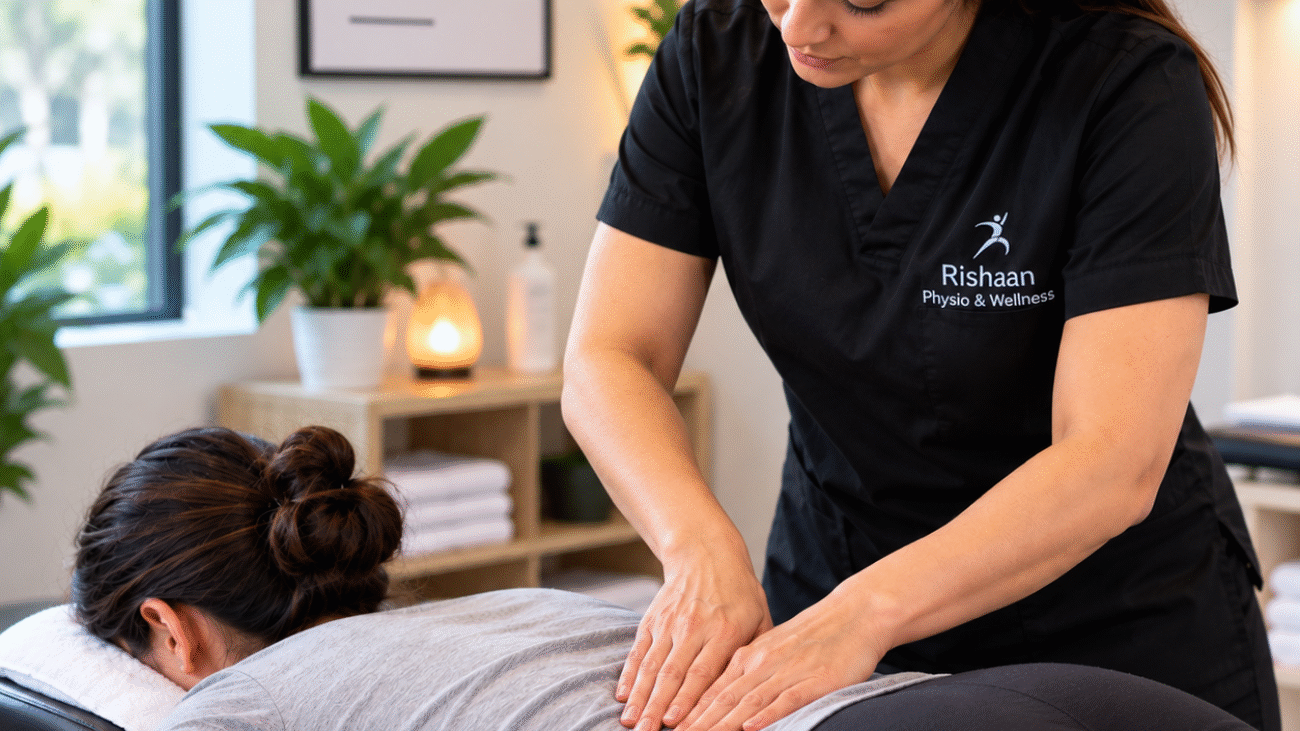
Massage Therapy for Lower Back Pain & Sciatica in Mississauga
Discover how registered massage therapy can help relieve lower back pain and sciatica by reducing muscle tension, improving movement, and easing nerve irritation. Learn what to expect from treatment and when massage is the right choice.
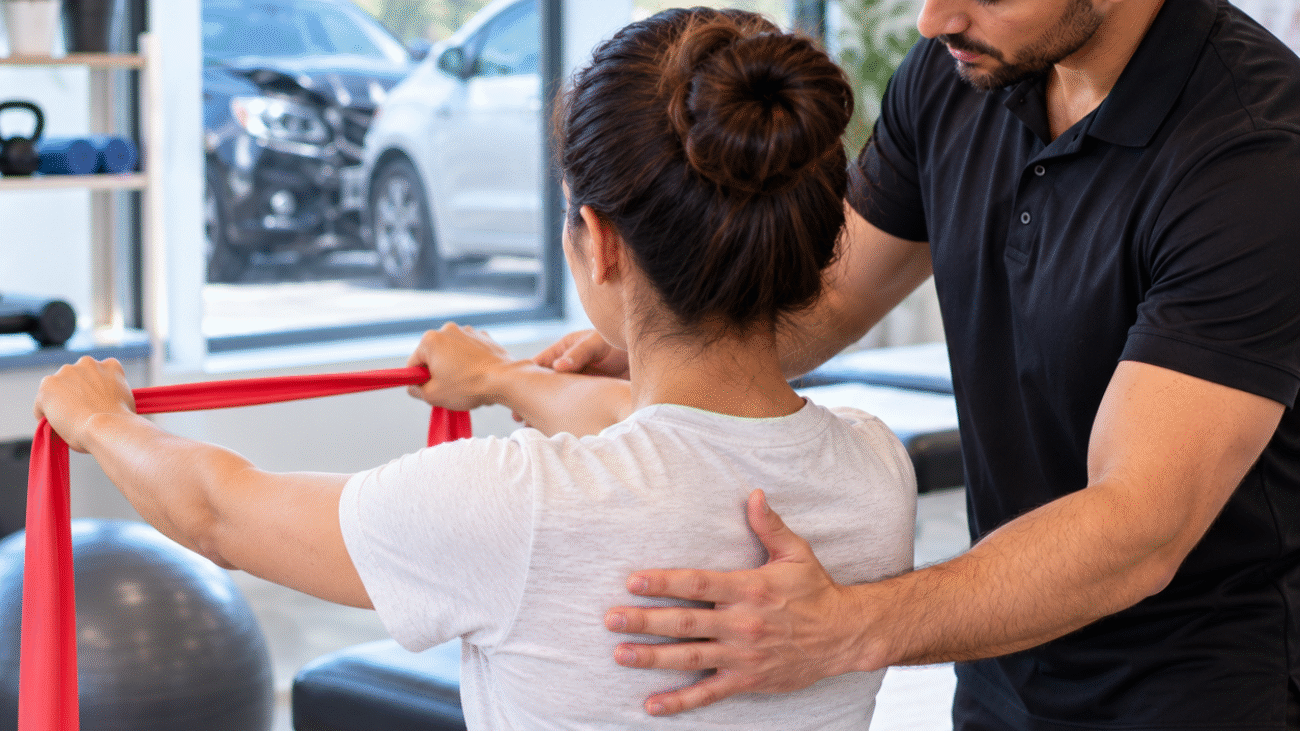
Car Accident Physiotherapy in Mississauga — MVA Claims, Direct Billing & Recovery
Car accidents can cause whiplash, back pain, headaches, and stiffness. Learn how physiotherapy supports MVA recovery and how Ontario insurance claims and direct billing work.
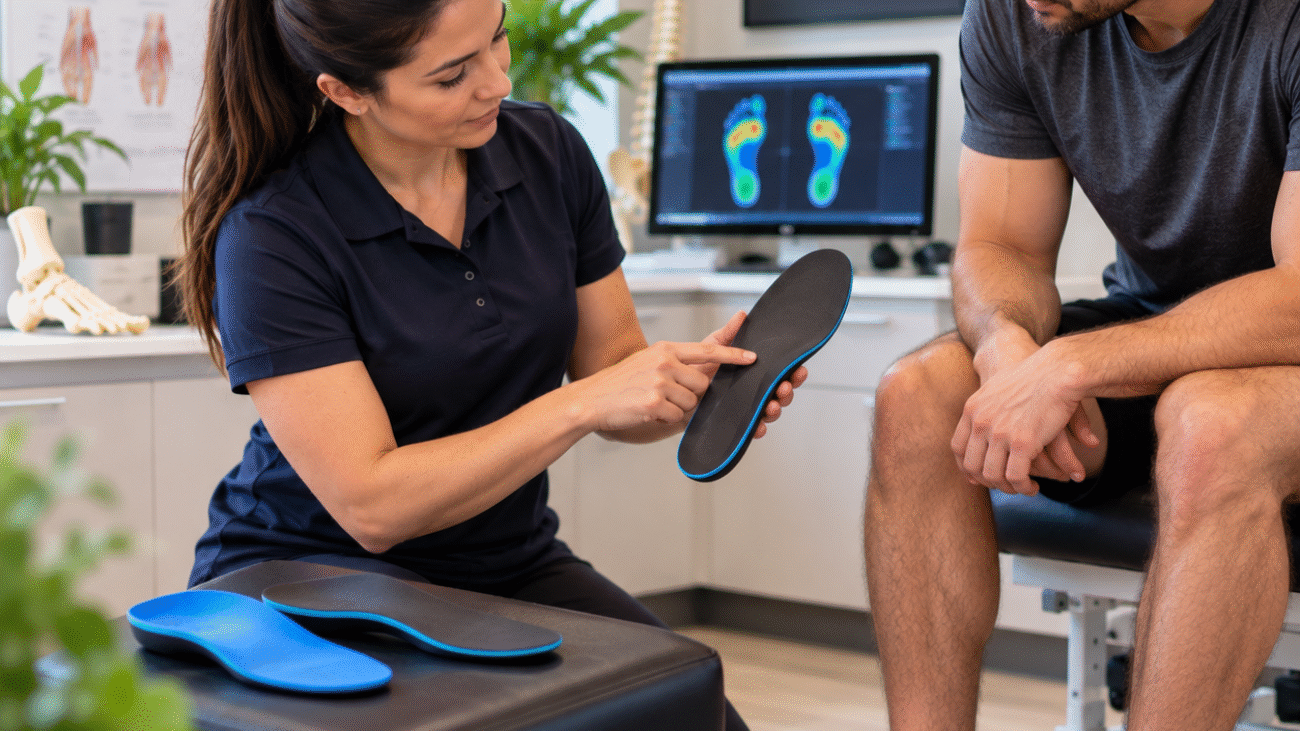
Custom Orthotics for Flat Feet in Mississauga — Do They Really Help?
Do custom orthotics really help with flat feet? Learn how they can support the arch, improve foot alignment, reduce pain, and when they may be the right choice for you.
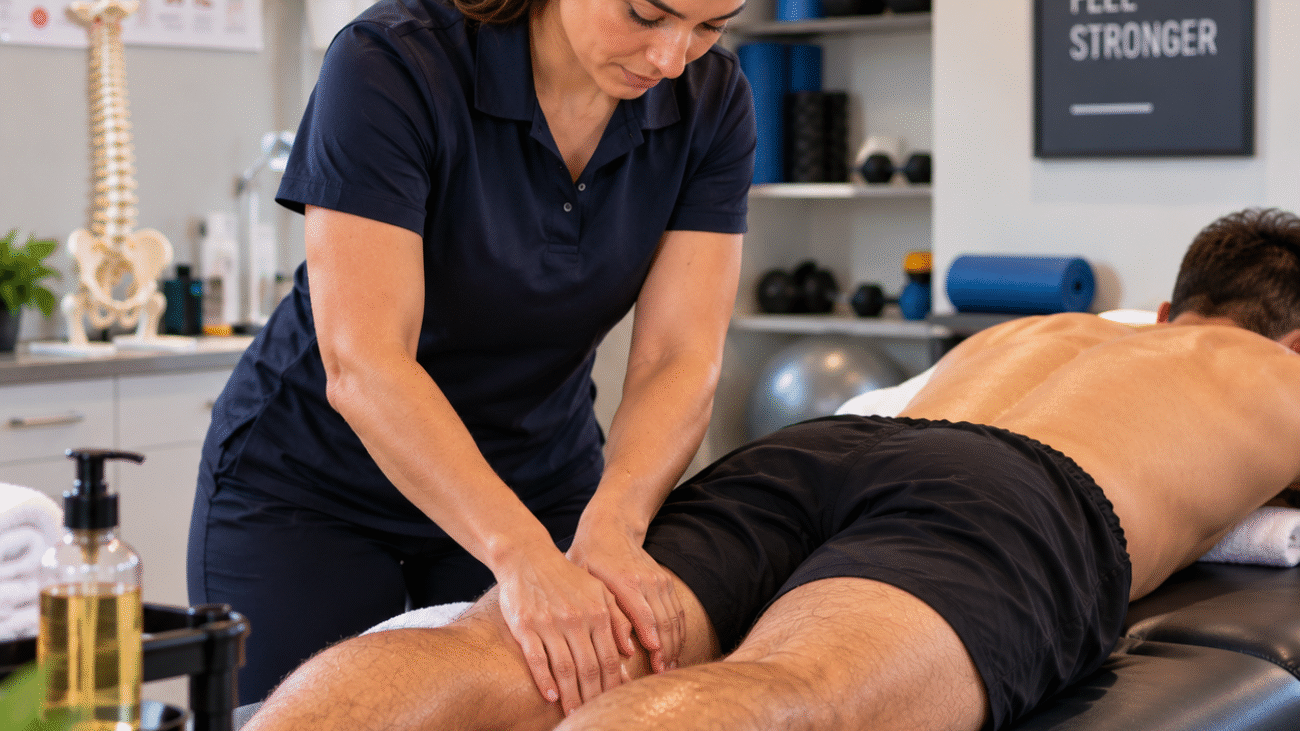
Sports Massage in Mississauga — Faster Recovery for Athletes & Weekend Warriors
Recover faster, move better, and stay injury-free with sports massage in Mississauga. Designed for athletes and weekend warriors, targeted massage therapy can help reduce muscle soreness, improve flexibility, and support recovery.
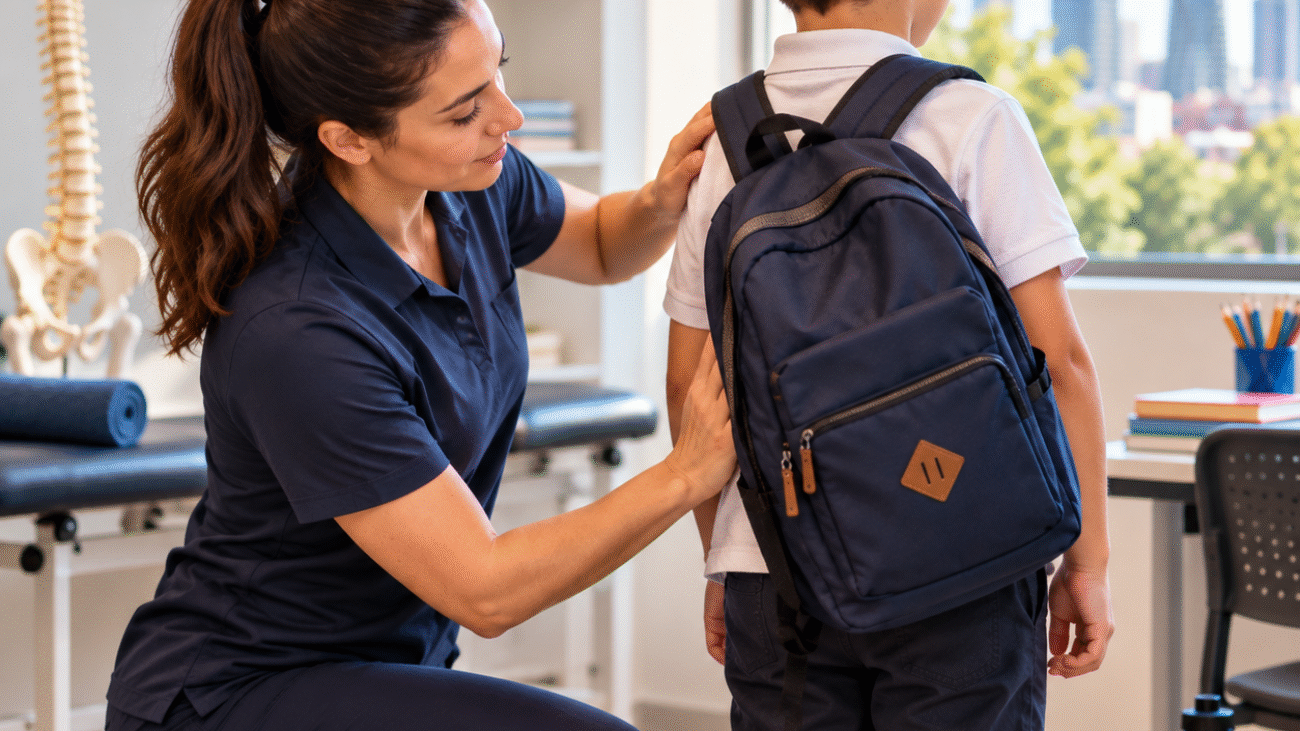
Back-to-School Backpack Pain: A Physiotherapist’s Guide for Mississauga Parents
Heavy school bags are a leading cause of back, neck and shoulder pain in Mississauga kids. A physiotherapist explains safe weight limits, warning signs, and how to fix it.
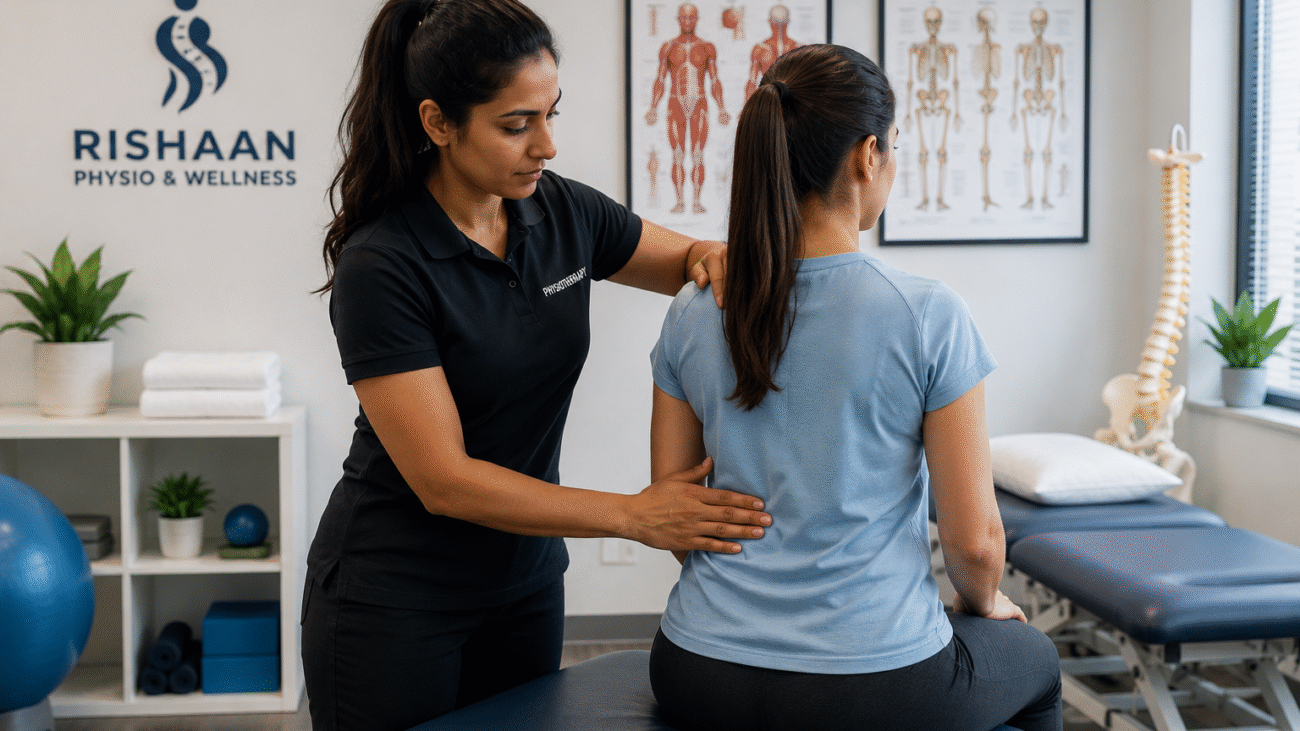
Posture Correction in Mississauga: What Physio Experts Recommend for Desk Workers
Mississauga is one of Ontario’s largest business hubs — home to thousands of office workers, remote professionals, financial services employees, and tech workers who spend 6, 8, or even 10 hours a day seated at a desk. And this prolonged sitting is silently causing an epidemic of neck pain, headaches, upper back tightness, lower back pain, and shoulder dysfunction.
The most common advice? “Sit up straight.” But posture correction is far more complex — and far more achievable — than a simple reminder to straighten your spine. At Rishaan Physio & Wellness Clinic in Mississauga, our physiotherapists have helped hundreds of desk workers not just manage posture-related pain, but genuinely correct the underlying muscle imbalances that cause it.
WHY DESK WORK DESTROYS YOUR POSTURE
The human body was not designed for prolonged sitting. When you sit — particularly in the typical office posture — a cascade of muscular and skeletal adaptations occur:
FORWARD HEAD POSTURE (TECH NECK)
For every inch your head moves forward of its neutral position over the spine, the effective weight on your cervical spine increases dramatically. Most desk workers carry their head 2–3 inches forward — effectively loading their cervical spine with 27–42 pounds (compared to the normal 12 pounds in neutral). Over years, this causes:
- Deep cervical flexor muscle inhibition and weakness
- Upper trapezius and levator scapulae tightening and pain
- Cervicogenic headaches
- Disc compression at C5-C6 and C6-C7
ROUNDED SHOULDERS (PROTRACTED SCAPULAE)
Hours of typing and mouse use cause the pectoral muscles (chest) to shorten and tighten, while the middle and lower trapezius and rhomboids (upper back muscles) become lengthened and weak. This imbalance pulls the shoulders forward, narrows the subacromial space (contributing to shoulder impingement), and creates chronic upper back pain.
KYPHOTIC THORACIC SPINE
The mid-back (thoracic spine) becomes excessively rounded — a posture called hyperkyphosis. This restricts breathing depth, increases lower back compensatory strain, and limits overhead mobility.
ANTERIOR PELVIC TILT AND TIGHT HIP FLEXORS
Prolonged sitting tightens the hip flexors (psoas and iliacus) and inhibits the gluteal muscles. The resulting anterior pelvic tilt increases lumbar lordosis and places chronic compressive load on the lumbar discs and facet joints — the anatomical basis for the epidemic of lower back pain among office workers.
COMMON SYMPTOMS OF DESK-WORK POSTURE PROBLEMS
- Persistent neck pain and stiffness
- Tension headaches (daily or recurring)
- Upper back aching between the shoulder blades
- Shoulder tightness and restricted mobility
- Lower back pain that worsens through the day
- Hip tightness and difficulty standing fully upright
- Jaw clenching and TMJ discomfort
- Eye strain and fatigue (related to screen positioning)
- Tingling or numbness in the hands (from cervical nerve compression)
HOW PHYSIOTHERAPY CORRECTS POSTURE
Posture correction is not about willpower or reminding yourself to sit up. It’s about systematically addressing the muscle imbalances and movement patterns that your body has developed over years of desk work. This requires professional guidance — and a structured program.
At Rishaan Physio in Mississauga, posture correction involves:
POSTURAL ASSESSMENT
Your physiotherapist conducts a comprehensive postural analysis — photographing and measuring your standing and seated posture, assessing muscle length, strength, and joint mobility — to identify your specific pattern of dysfunction. Not all “bad posture” is the same; treatment must target your particular imbalances.
- Cervical joint mobilisation: Restores mobility to stiff upper cervical joints
- Thoracic spine mobilisation/manipulation: Opens up the kyphotic mid-back and improves thoracic extension
- Pectoral and anterior shoulder stretching: Releases shortened chest muscles
- Hip flexor manual release: Addresses psoas tightness contributing to anterior pelvic tilt
CORRECTIVE EXERCISE PROGRAM
The cornerstone of posture correction. Your program will include:
For the cervical spine:
- Deep cervical flexor activation (chin tucks)
- Cervical retraction exercises
- Neck flexor endurance training
For the thoracic spine and shoulders:
- Thoracic extension over a foam roller or chair
- Scapular retraction and depression exercises
- Wall slides and YTW exercises for lower trapezius
- Chest opening stretches
For the lower back and hips:
- Hip flexor stretching (Thomas stretch, kneeling hip flexor)
- Glute activation (bridges, clamshells, single-leg deadlifts)
- Core stability (dead bugs, bird dogs, plank progressions)
- Posterior pelvic tilt training
Chronic postural muscles — particularly the upper trapezius, levator scapulae, and suboccipital muscles — develop dense trigger points that resist manual therapy alone. IMS at Rishaan Physio provides rapid release of these trigger points, allowing the corrective exercises to work more effectively.
ERGONOMIC ASSESSMENT AND WORKPLACE ADVICE
The most effective posture correction program is undermined if you return to a poorly set-up workstation for 8 hours every day. Your physiotherapist will provide specific ergonomic recommendations:
MONITOR HEIGHT: Top of screen at or slightly below eye level. Avoids both forward head (screen too low) and neck extension (screen too high).
MONITOR DISTANCE: Arm’s length away (approximately 50–70 cm). Prevents eye strain and forward reaching.
CHAIR HEIGHT: Hips at 90° or slightly open. Thighs parallel to ground. Feet flat on floor.
LUMBAR SUPPORT: Use a lumbar roll or rolled towel in the curve of the lower back if your chair lacks adequate support.
KEYBOARD AND MOUSE: Elbows at 90°, shoulders relaxed. Mouse close to body — reaching for a distant mouse chronically shortens the shoulder.
MOVEMENT BREAKS: Set a timer for every 30–45 minutes. Stand, walk briefly, perform 2–3 postural exercises (chin tucks, shoulder rolls, hip flexor stretch). Posture is dynamic — no static position, however “correct,” is beneficial for more than 30–45 minutes continuously.
HOW LONG DOES POSTURE CORRECTION TAKE?
This is highly individual, but as a general guide:
- Pain relief: Often within 2–4 weeks of consistent treatment
- Measurable postural improvements: 6–12 weeks of consistent exercise
- Lasting correction: 3–6 months with consistent daily exercise and ergonomic modification
Posture correction is a process, not a treatment. The physiotherapy program gives you the tools — the consistency you apply determines the long-term outcome.
FREQUENTLY ASKED QUESTIONS
Q: Can physiotherapy actually correct years of bad posture?
A: Yes — but “correct” should be understood as “significantly improve” rather than “return to perfect.” The musculoskeletal system is remarkably adaptable. Consistent, targeted exercise over 3–6 months produces meaningful, measurable posture improvements even after years of dysfunction.
Q: Are standing desks the solution to posture problems?
A: Standing desks help by adding postural variety, but standing all day is as harmful as sitting all day — both in the same position for hours. The solution is movement variability: sit for 45 minutes, stand for 15, move briefly. A sit-stand desk is a useful tool, but it doesn’t replace physiotherapy and movement.
Q: How do I know if my posture is causing my headaches?
A: If your headaches start at the base of the skull, worsen through the day (especially after hours at a desk), are located at the back of the head and temples, and ease briefly with neck stretching — they are very likely cervicogenic (neck-sourced) headaches related to postural dysfunction.
Q: Can my child or teenager have posture correction physiotherapy?
A: Yes. Adolescent posture problems — driven by school desk work, phone use, and heavy backpacks — respond very quickly to physiotherapy because the musculoskeletal system is still highly adaptable. Early intervention prevents the establishment of chronic adult patterns.
Q: Do I need a referral from my doctor for posture correction physiotherapy?
A: No. You can book directly at Rishaan Physio in Mississauga without a physician referral.
BOOK YOUR POSTURE ASSESSMENT IN MISSISSAUGA
Stop managing your posture symptoms. Start correcting the cause.
Rishaan Physio & Wellness Clinic
5105 Hurontario St, Unit 7, Mississauga, ON
Phone: (905) 800-1661
Website: rishaanphysio.com
Open 7 days a week | Free pickup & drop-off available

IT Band Syndrome: Causes, Treatment and Physiotherapy for Runners in Mississauga
If you’re a runner in Mississauga — whether you train along the Credit River trails, through Heartland Town Centre, or on the roads of Erin Mills — IT band syndrome (ITBS) is one of the most frustrating injuries you’ll encounter.
It typically starts as a dull ache on the outer side of the knee. Then it progresses to a sharp, burning pain that forces you to walk. Within weeks, runs that were once manageable become impossible beyond 20 minutes. Foam rolling helps briefly — but the pain returns the moment you lace up again.
IT band syndrome is the most common cause of lateral knee pain in runners, accounting for up to 22% of all running-related injuries. And here’s the key insight that most runners miss: IT band syndrome is not actually a stretching problem. It’s a hip and biomechanics problem. Which is exactly why physiotherapy — not foam rolling — is the solution.
WHAT IS THE IT BAND?
The iliotibial (IT) band is a thick band of fascia — fibrous connective tissue — that runs along the outer side of the thigh, from the hip (iliac crest and tensor fasciae latae muscle) down to the outer edge of the knee (Gerdy’s tubercle on the tibia).
Unlike a muscle, the IT band cannot stretch. It acts as a stabiliser for the knee and hip during the swing phase of running.
WHAT CAUSES IT BAND SYNDROME?
Contrary to popular belief, ITBS is not caused by the IT band being “too tight” — it is caused by excessive compression of the IT band against the lateral femoral epicondyle (a bony prominence on the outer femur) during repetitive knee flexion-extension. When the knee bends to approximately 30° during running, the IT band crosses over this point — and if the hip stabilisers are weak or running mechanics are poor, compressive forces at this point become excessive.
ROOT CAUSES: WHY IT BAND SYNDROME HAPPENS
WEAK HIP ABDUCTORS AND GLUTES
The gluteus medius and minimus are responsible for controlling pelvic drop during single-leg stance. When these muscles are weak, the pelvis drops on the opposite side during running, causing increased hip adduction (inward movement) — which dramatically increases IT band compressive load. This is the number one cause of ITBS in runners.
TRAINING ERRORS
- Increasing mileage too rapidly (the “too much, too soon” rule)
- Adding hills, speedwork, or interval training without adequate base
- Running exclusively on cambered roads (the slant places uneven load on the lower limb)
- Worn or inappropriate running shoes
BIOMECHANICAL FACTORS
- Overpronation (causes tibial internal rotation, increasing IT band tension)
- Crossover running gait (feet crossing midline, increasing hip adduction)
- Excessive forward trunk lean
- Short, overstriding stride pattern
ANATOMICAL FACTORS
- Narrow IT band width
- Prominent lateral femoral epicondyle
- Leg length discrepancy
- Excessive Q-angle (wide hips)
WHY FOAM ROLLING DOESN’T FIX IT BAND SYNDROME
Foam rolling the IT band is the most common self-treatment strategy — and while it provides temporary pain relief, it does not address the underlying cause.
Since the IT band cannot stretch or lengthen (it’s fascia, not muscle), foam rolling cannot “release” it. What foam rolling does is temporarily desensitise the lateral soft tissues and may reduce trigger points in the tensor fasciae latae (TFL) — providing brief relief.
However, if the hip weakness and running mechanics driving the condition are not corrected, the pain returns every time you run.
Physiotherapy addresses the root cause — not just the symptoms.
HOW PHYSIOTHERAPY TREATS IT BAND SYNDROME
PHASE 1: ACUTE PAIN MANAGEMENT (Weeks 1–2)
- Activity modification: reduce or eliminate running temporarily. Maintain fitness with swimming, cycling, or elliptical (activities that don’t load the IT band compression zone)
- Manual therapy to the TFL, gluteal muscles, and lateral hip
- IMS / dry needling for trigger points in TFL and gluteus medius
- Ice post-activity
PHASE 2: HIP STRENGTHENING AND BIOMECHANICS (Weeks 2–6)
This is the critical phase. Your physiotherapist at Rishaan Physio will:
- Design a progressive hip abductor and glute strengthening program (single-leg squats, lateral band walks, hip thrusts, clamshells — progressively loaded)
- Assess and correct running gait biomechanics using video analysis if available
- Address overpronation with custom orthotics if indicated
- Stretch the TFL and hip flexors (not the IT band itself)
- Correct any contributing trunk weakness (core stability)
PHASE 3: GRADED RUNNING RETURN (Weeks 6–12)
- Structured return-to-run program beginning with short, slow intervals
- Running gait cues to reduce crossover, increase step width, and reduce hip drop
- Progressive mileage increases within a 10% per week rule
- Footwear and orthotic optimisation
HOW LONG DOES IT BAND SYNDROME TAKE TO HEAL?
With appropriate physiotherapy:
- Mild ITBS (less than 3 months): 4–8 weeks to return to pain-free running
- Moderate ITBS (3–6 months): 8–12 weeks
- Chronic ITBS (more than 6 months with previous failed treatment): 12–16 weeks
The key predictor of recovery is compliance with hip strengthening and gait modification. Runners who continue training through ITBS without addressing the cause face a cycle of recurring injury.
PREVENTING IT BAND SYNDROME FROM RECURRING
Once you have recovered, long-term prevention involves:
- Maintaining hip abductor and glute strength with 2–3 strength sessions per week
- Following the 10% mileage increase rule — never increase weekly mileage by more than 10%
- Running with a wider step width and increased cadence (aim for 170–180 steps per minute)
- Replacing running shoes every 600–800 km
- Addressing foot pronation with appropriate footwear or orthotics if indicated
- Including recovery activities (cross-training, massage therapy, stretching) in your training plan
FREQUENTLY ASKED QUESTIONS
Q: Should I stop running completely with IT band syndrome?
A: Initially, yes — a 1–2 week rest from running while beginning physiotherapy is usually recommended. Continuing to run through acute ITBS inflammation makes recovery significantly longer. Once the acute phase resolves, a structured graded return-to-run program begins.
Q: Can I bike or swim instead of running during recovery?
A: Yes — cycling (especially stationary bike with high seat) and swimming do not load the IT band compression zone and are excellent for maintaining cardiovascular fitness during recovery.
Q: Will cortisone injections help IT band syndrome?
A: Cortisone injections can reduce inflammation in the short term but do not address the underlying biomechanical causes. They are generally considered when conservative physiotherapy has not provided adequate relief, as a bridge to allow more effective rehabilitation.
Q: Does IT band syndrome ever require surgery?
A: Rarely. Surgery (IT band release) is considered only after 6–12 months of failed conservative treatment. The vast majority of ITBS cases resolve with structured physiotherapy.
Q: Can custom orthotics help IT band syndrome?
A: Yes — if overpronation is contributing to your ITBS (which is common), custom orthotics can reduce the tibial rotation and hip adduction forces that load the IT band.
BOOK YOUR RUNNING INJURY ASSESSMENT IN MISSISSAUGA
Don’t let IT band syndrome sideline your training. Get a proper assessment, build the hip strength you need, and return to running stronger than before.
Rishaan Physio & Wellness Clinic
5105 Hurontario St, Unit 7, Mississauga, ON
Phone: (905) 800-1661
Website: rishaanphysio.com
Open 7 days a week | Free pickup & drop-off available