

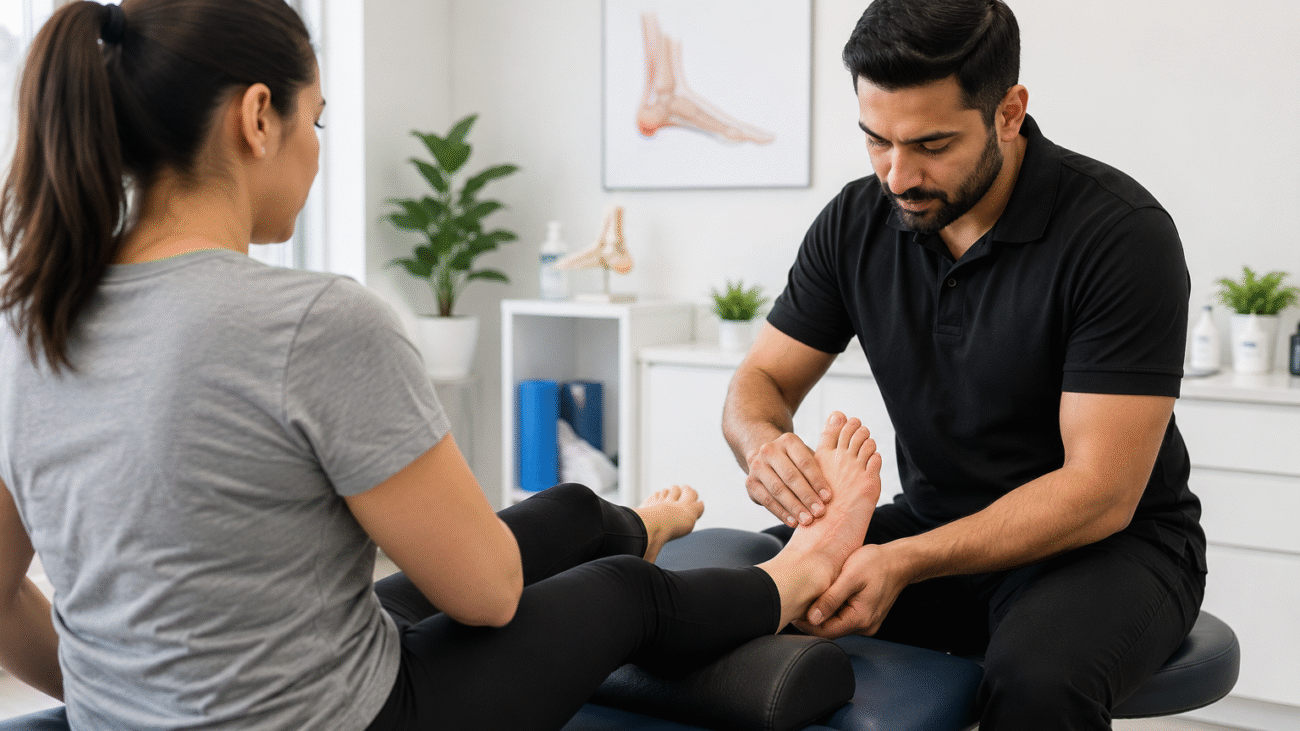
That stabbing pain in your heel the moment you take your first steps in the morning — that’s the hallmark of plantar fasciitis. It’s one of the most common foot conditions we treat at Rishaan Physio & Wellness Clinic in Mississauga, and it affects runners, teachers, retail workers, and anyone who spends long hours on their feet.
The problem is that many people try to “rest it off” — only to find the pain returns the moment they go back to their normal activities. That’s because rest alone doesn’t fix plantar fasciitis. Here’s what actually does.
What Is Plantar Fasciitis?
The plantar fascia is a thick band of connective tissue that runs along the bottom of your foot, connecting your heel bone to your toes. It acts like a bowstring — supporting the arch and absorbing shock when you walk or run.
When this tissue is repeatedly stressed — through overuse, poor footwear, tight calf muscles, or biomechanical issues — it becomes inflamed at the point where it attaches to the heel bone. This is plantar fasciitis.
Typical symptoms include:
- Sharp heel pain with the first steps in the morning
- Pain that eases after a few minutes of walking but returns with prolonged activity
- Tenderness at the base of the heel when pressed
- Tightness in the Achilles tendon or calf
Why Rest Alone Doesn’t Work
Rest reduces inflammation temporarily — but it doesn’t address why the fascia became irritated in the first place. As soon as you return to activity, the same forces are applied to the same tissue, and the cycle of pain begins again.
The key is to fix the underlying cause: tight calves, weak foot muscles, poor footwear, or abnormal foot mechanics (flat feet or high arches).
What Actually Works: Physiotherapy for Plantar Fasciitis
Manual Therapy
Soft tissue release of the plantar fascia, calf muscles, and Achilles tendon. This reduces tension through the entire posterior chain that contributes to heel pain.
Shockwave Therapy
For chronic plantar fasciitis (lasting more than 3 months), shockwave therapy is one of the most effective treatments available. High-energy acoustic pulses stimulate healing in the damaged tissue and break down calcium deposits. Most patients respond within 3–5 sessions. Learn more about shockwave therapy at Rishaan Physio.
Stretching & Eccentric Loading
Specific calf stretches and eccentric heel drop exercises rebuild strength in the plantar fascia and Achilles tendon — the most evidence-based exercise approach for this condition.
Custom Orthotics
If abnormal foot mechanics (flat feet, overpronation, high arches) are contributing to your plantar fasciitis, custom orthotics can redistribute load away from the heel and dramatically reduce recurrence. Learn about custom orthotics at Rishaan Physio.
Taping
Low-Dye taping provides immediate pain relief by supporting the arch and offloading the plantar fascia. It’s a useful short-term tool while strength and flexibility are being restored.
How Long Does Plantar Fasciitis Take to Heal?
- Mild / recent onset (under 3 months): 4–8 weeks with physiotherapy
- Chronic plantar fasciitis (3+ months): 8–16 weeks; shockwave therapy recommended
The longer plantar fasciitis goes untreated, the more resistant it becomes. Don’t wait.
Frequently Asked Questions
What is the fastest way to cure plantar fasciitis?
A combination of physiotherapy, specific stretching, and shockwave therapy (for chronic cases) gives the fastest results. Rest alone is not sufficient — you need to address the underlying tissue damage and biomechanical causes.
Does physiotherapy help plantar fasciitis?
Yes — physiotherapy is highly effective for plantar fasciitis. Manual therapy, eccentric loading exercises, and shockwave therapy address both the pain and the root cause, preventing recurrence.
How long does plantar fasciitis take to heal?
With consistent physiotherapy, most patients see significant improvement in 4–8 weeks. Chronic cases (3+ months) may take 3–4 months and often benefit from shockwave therapy.
Can I walk with plantar fasciitis?
Yes, gentle walking is fine and encouraged. Avoid prolonged standing, running, or walking on hard surfaces without proper footwear. Your physiotherapist will guide you on activity modification.
Is shockwave therapy effective for plantar fasciitis?
Yes — shockwave therapy is one of the most evidence-supported treatments for chronic plantar fasciitis that hasn’t responded to rest and stretching. It stimulates healing in the damaged tissue and provides lasting pain relief in most patients.
Book Plantar Fasciitis Treatment at Rishaan Physio
Shockwave therapy & physiotherapy — at one clinic in Mississauga.
No referral needed | Same-day appointments | Direct billing
📍 5105 Hurontario St, Unit 7, Mississauga 📞 Call (905)-800-1661