

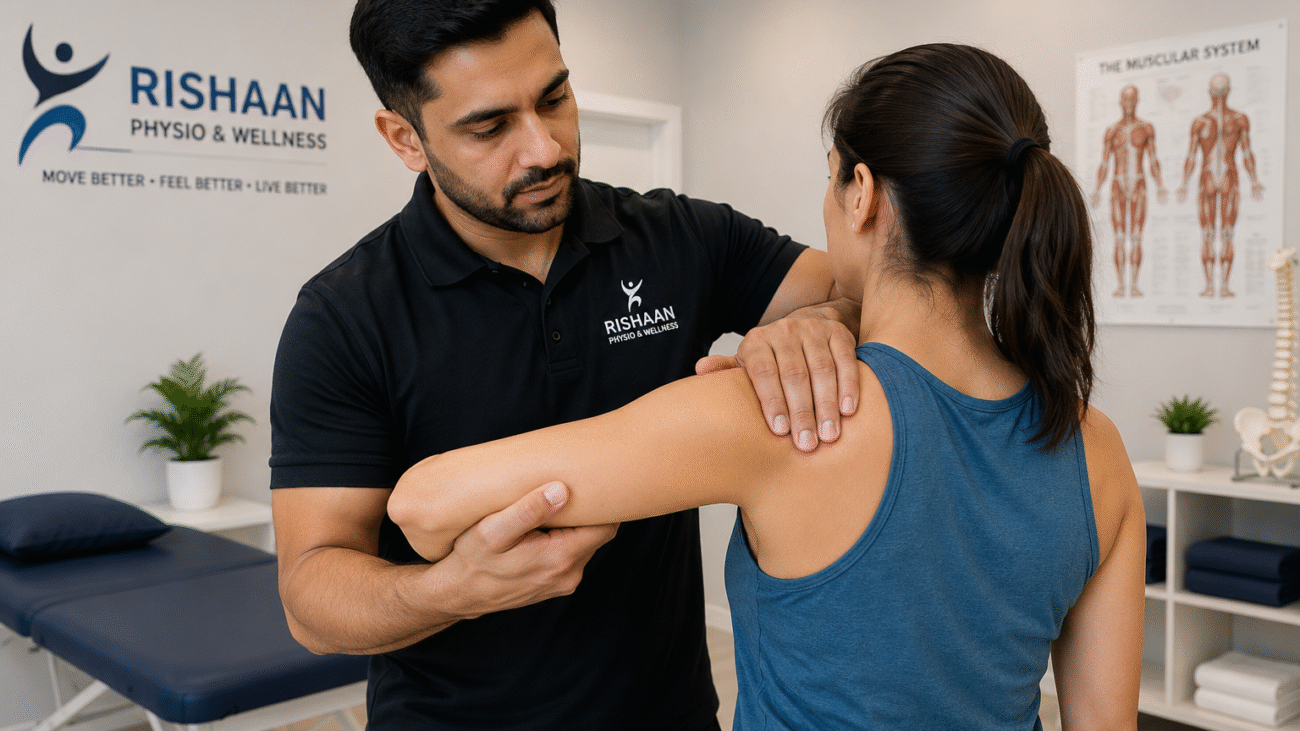
If you’ve been waking up at night with shoulder pain, struggling to reach behind your back, or finding it impossible to lift your arm above shoulder height — you may have frozen shoulder. It’s one of the most painful and misunderstood conditions our physiotherapists treat at Rishaan Physio & Wellness Clinic in Mississauga.
The frustrating reality is that many people with frozen shoulder are told to “wait it out.” And while frozen shoulder does eventually resolve on its own, it can take 2–3 years without treatment. Physiotherapy can cut that timeline dramatically.
What Is Frozen Shoulder?
Frozen shoulder — medically called adhesive capsulitis — is a condition where the capsule surrounding the shoulder joint becomes inflamed, thickened, and then forms scar tissue (adhesions). This shrinks the space inside the joint and restricts movement — sometimes severely.
It’s most common in people aged 40–60, and is more prevalent in women. People with diabetes, thyroid disorders, or those who’ve had a period of shoulder immobility (due to injury or surgery) are at higher risk.
The 3 Stages of Frozen Shoulder
Stage 1 — Freezing (2–9 months)
Pain gradually increases, especially at night. Movement becomes more restricted as inflammation builds up inside the joint capsule. This is often the most painful stage.
Stage 2 — Frozen (4–12 months)
Pain may slightly reduce, but stiffness is at its worst. The shoulder is significantly limited in all directions. Daily tasks — dressing, reaching, driving — become very difficult.
Stage 3 — Thawing (5–24 months)
Movement slowly begins to return. Without physiotherapy, this stage can drag on for years. With physiotherapy, the thawing stage is accelerated and patients often regain full function in a fraction of the time.
How Physiotherapy Treats Frozen Shoulder
Treatment at each stage is different. Our Mississauga physiotherapists tailor the approach based on which stage you’re in.
Manual Therapy & Joint Mobilization
Skilled hands-on techniques to gently stretch the capsule, break down adhesions, and restore movement to the joint. Grade III and IV mobilizations are particularly effective in the frozen and thawing stages.
Guided Stretching Program
Specific stretches that target the tight capsule — anterior, posterior, and inferior. These are carefully progressed so they don’t aggravate inflammation.
Heat Therapy
Applied before manual therapy sessions to warm the tissues, making mobilization more comfortable and effective.
Home Exercise Program
Pendulum exercises, wall walks, and cross-body stretches are assigned as home exercises to maintain progress between sessions. Consistency at home is critical to recovery.
Pain Management in the Freezing Stage
During the most painful early stage, aggressive mobilization can worsen inflammation. Our physiotherapists use gentler techniques, IFC therapy, and positioning advice to manage pain while slowly maintaining range of motion.
Frozen Shoulder vs. Rotator Cuff Tear — How to Tell the Difference
Both cause shoulder pain and limited movement, but they require different treatment. The key difference: with a rotator cuff tear, passive movement (where the therapist moves your arm for you) is often preserved. With frozen shoulder, all movement is restricted — both active and passive. A physiotherapy assessment can reliably distinguish between the two without imaging.
How Long Does Recovery Take with Physiotherapy?
- With physiotherapy: Most patients regain functional movement in 3–6 months
- Without physiotherapy: 2–3 years for natural resolution — often with incomplete recovery
Early intervention in the freezing stage gives the best outcomes. If you’re in the frozen or thawing stage, it’s never too late to start.
Frequently Asked Questions
Does physiotherapy help frozen shoulder?
Yes — physiotherapy is the most effective non-surgical treatment for frozen shoulder. Manual therapy and guided stretching can significantly reduce the duration of the condition and restore full range of motion faster than waiting for natural resolution.
How long does frozen shoulder last without treatment?
Without treatment, frozen shoulder typically lasts 2–3 years and may resolve incompletely. With physiotherapy, most patients regain functional movement within 3–6 months.
Can frozen shoulder come back after treatment?
Recurrence in the same shoulder is rare once fully resolved. However, approximately 20–30% of people develop frozen shoulder in the opposite shoulder at some point. Maintaining shoulder mobility and managing risk factors (like diabetes) reduces this risk.
What exercises should I avoid with frozen shoulder?
Avoid any exercises that cause sharp or severe pain — forcing range of motion can worsen inflammation, especially in the freezing stage. Your physiotherapist will prescribe the right exercises for your specific stage.
Is frozen shoulder covered by insurance in Ontario?
Yes — physiotherapy for frozen shoulder is covered by most extended health insurance plans in Ontario. Rishaan Physio offers direct billing so there’s no upfront cost to you.