
Pregnancy is a time of profound physical change — and with it comes a range of discomforts that many expectant mothers simply accept as part of the experience. Lower back pain. Swollen feet and ankles. Hip discomfort. Sciatic nerve pain. Difficulty sleeping.
What many Mississauga moms-to-be don’t know is that registered massage therapy (RMT) is a safe, evidence-supported way to address these symptoms throughout pregnancy — and that it offers benefits well beyond simple relaxation.
At Rishaan Physio & Wellness Clinic in Mississauga, our registered massage therapists are trained in prenatal massage techniques appropriate for each trimester. Here’s everything expectant mothers need to know.
IS PRENATAL MASSAGE SAFE?
Yes — prenatal massage performed by a trained Registered Massage Therapist (RMT) is safe throughout pregnancy, including the first trimester. There is no credible scientific evidence that massage causes miscarriage. This is a common misconception, likely arising from the general caution health professionals take in the first trimester when miscarriage risk is naturally highest.
That said, certain precautions apply:
– Deep pressure is avoided over the abdomen and certain acupressure points
– Positioning is modified for safety and comfort at each trimester stage
– Women with high-risk pregnancies, preeclampsia, placenta previa, deep vein thrombosis, or other medical complications should obtain clearance from their obstetrician or midwife before booking
At Rishaan Physio, we conduct a thorough intake prior to every prenatal massage to ensure it is appropriate for your specific pregnancy.
BENEFITS OF PRENATAL MASSAGE
LOWER BACK PAIN RELIEF
Lower back pain affects approximately 70% of pregnant women. The growing uterus shifts the centre of gravity forward, increasing lumbar lordosis and loading the lumbar facet joints and sacroiliac joints. Prenatal massage targets the erector spinae, quadratus lumborum, and gluteal muscles to relieve tension and reduce pain — providing relief that medication cannot safely offer during pregnancy.
REDUCED SCIATIC NERVE PAIN
As the uterus expands, it can compress the sciatic nerve or the piriformis muscle (which overlies the sciatic nerve) can go into spasm. Gentle deep tissue techniques targeting the piriformis and surrounding hip muscles provide significant sciatic pain relief for many pregnant women.
REDUCED SWELLING (OEDEMA)
Pregnancy-related fluid retention causes swelling in the legs, ankles, and feet — particularly in the third trimester. Gentle lymphatic drainage techniques encourage fluid movement through the lymphatic system, reducing puffiness and improving comfort.
IMPROVED SLEEP
Pregnancy discomfort, anxiety, and the need for frequent bathroom trips significantly disrupt sleep. Prenatal massage activates the parasympathetic nervous system, reduces cortisol, and increases serotonin — helping pregnant women achieve deeper, more restorative sleep.
REDUCED ANXIETY AND DEPRESSION
A landmark 2004 study by Field et al. published in the Journal of Psychosomatic Obstetrics & Gynaecology found that women who received bi-weekly prenatal massage had significantly lower levels of anxiety, depression, and cortisol — and their newborns had fewer complications and higher birth weights. Subsequent research has supported these findings.
RELIEF FROM HEADACHES AND NECK TENSION
Postural changes, hormonal fluctuations, and increased blood volume during pregnancy contribute to tension headaches and neck tightness. Massage targeting the cervical, trapezius, and shoulder muscles provides effective relief.
HIP AND PELVIC GIRDLE PAIN
Relaxin — the hormone that loosens ligaments in preparation for birth — can cause hypermobility and pain in the sacroiliac joints and symphysis pubis. Prenatal massage combined with appropriate physiotherapy (if indicated) addresses both the muscular and joint components of pelvic girdle pain.
PRENATAL MASSAGE BY TRIMESTER
FIRST TRIMESTER (Weeks 1–12)
Massage is safe but typically focuses on gentle relaxation techniques. We avoid deep pressure and position clients on their back (with a wedge if needed) or side-lying. Priority areas: neck, shoulders, upper back, and legs.
SECOND TRIMESTER (Weeks 13–26)
This is often the most comfortable trimester for massage. Side-lying positioning becomes standard as the abdomen grows. More therapeutic work can be done on the lower back, hips, and piriformis. Sciatic pain typically appears in this trimester.
THIRD TRIMESTER (Weeks 27–40)
Full side-lying positioning is used throughout. Focus shifts to lower back, glutes, hips, legs, and feet — the areas carrying the most load. Lymphatic drainage for oedema is introduced. Many women find bi-weekly massage most beneficial in the third trimester.
WHAT TO EXPECT AT YOUR PRENATAL MASSAGE APPOINTMENT
At Rishaan Physio in Mississauga, your prenatal massage appointment begins with a detailed health intake form covering your pregnancy stage, current symptoms, medical history, and any concerns raised by your obstetrician or midwife.
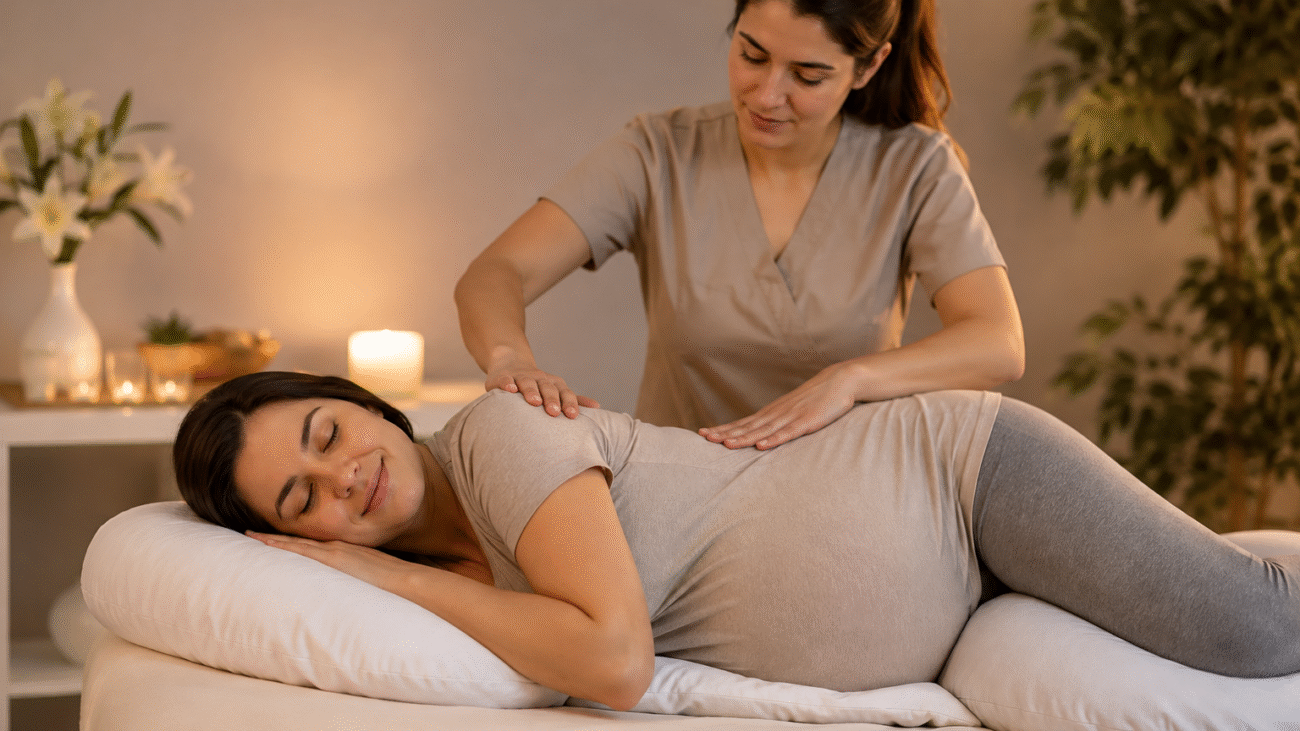
You’ll be positioned comfortably using specialized prenatal pillows and bolsters in a side-lying position that is safe and comfortable at any stage of pregnancy. Sessions are typically 60 minutes.
Your RMT will use a combination of Swedish massage techniques (effleurage, petrissage), modified deep tissue work, and lymphatic drainage as appropriate for your trimester and symptoms.
POSTNATAL MASSAGE
Recovery from childbirth — whether vaginal or caesarean — places significant demand on the body. Postnatal massage helps restore muscle function, reduce postpartum pain, support mental health during the fourth trimester, and address breastfeeding-related postural strain.
We recommend waiting at least 2 weeks after a vaginal birth and 6 weeks after a caesarean before beginning postnatal massage, and always with your physician’s clearance for caesarean deliveries.
FREQUENTLY ASKED QUESTIONS
Q: Is prenatal massage covered by insurance in Ontario?
A: Yes — registered massage therapy (RMT) services are covered by most extended health plans in Ontario, typically under the massage therapy or paramedical services category. Prenatal massage performed by a licensed RMT qualifies for this coverage.
Q: When should I start prenatal massage?
A: You can start at any point during pregnancy. Many women begin in the second trimester when they feel more comfortable, though first trimester massage is safe and beneficial for nausea, fatigue, and anxiety management.
Q: How often should I get prenatal massage?
A: Most practitioners recommend once every 2–4 weeks in the first and second trimesters, increasing to weekly or bi-weekly in the third trimester as discomfort typically increases.
Q: Can prenatal massage induce labour?
A: There is no scientific evidence that prenatal massage performed by a trained RMT induces labour. Certain acupressure points traditionally associated with uterine stimulation are intentionally avoided in standard prenatal massage protocols.
Q: Do I need a referral for prenatal massage?
A: No — you can book directly at Rishaan Physio. However, if you have a high-risk pregnancy or any complications, we recommend obtaining clearance from your obstetrician or midwife first.
BOOK YOUR PRENATAL MASSAGE IN MISSISSAUGA
You deserve to feel comfortable during your pregnancy. Our registered massage therapists at Rishaan Physio in Mississauga are trained to provide safe, evidence-based prenatal care tailored to each stage of your pregnancy.
Rishaan Physio & Wellness Clinic
5105 Hurontario St, Unit 7, Mississauga, ON
Phone: (905) 800-1661
Website: rishaanphysio.com
Open 7 days a week | Free pickup & drop-off available